
Walking Tour: Stop 22
Sciennes Hill House
5 Sciennes House Place, EH9 1NN

The best-documented meeting between Sir Walter Scott and Robert Burns
GPS Coordinates: 55°56'16.0"N 3°10'55.3"W
Scott Connection:
Scott Connection: Site of a gathering at which the young
Sir Walter Scott encountered Robert Burns during Burns’s celebrated visit to Edinburgh in the winter of 1786–87.
Date Range Relevant to Scott: Winter 1786–1787
Current Status:
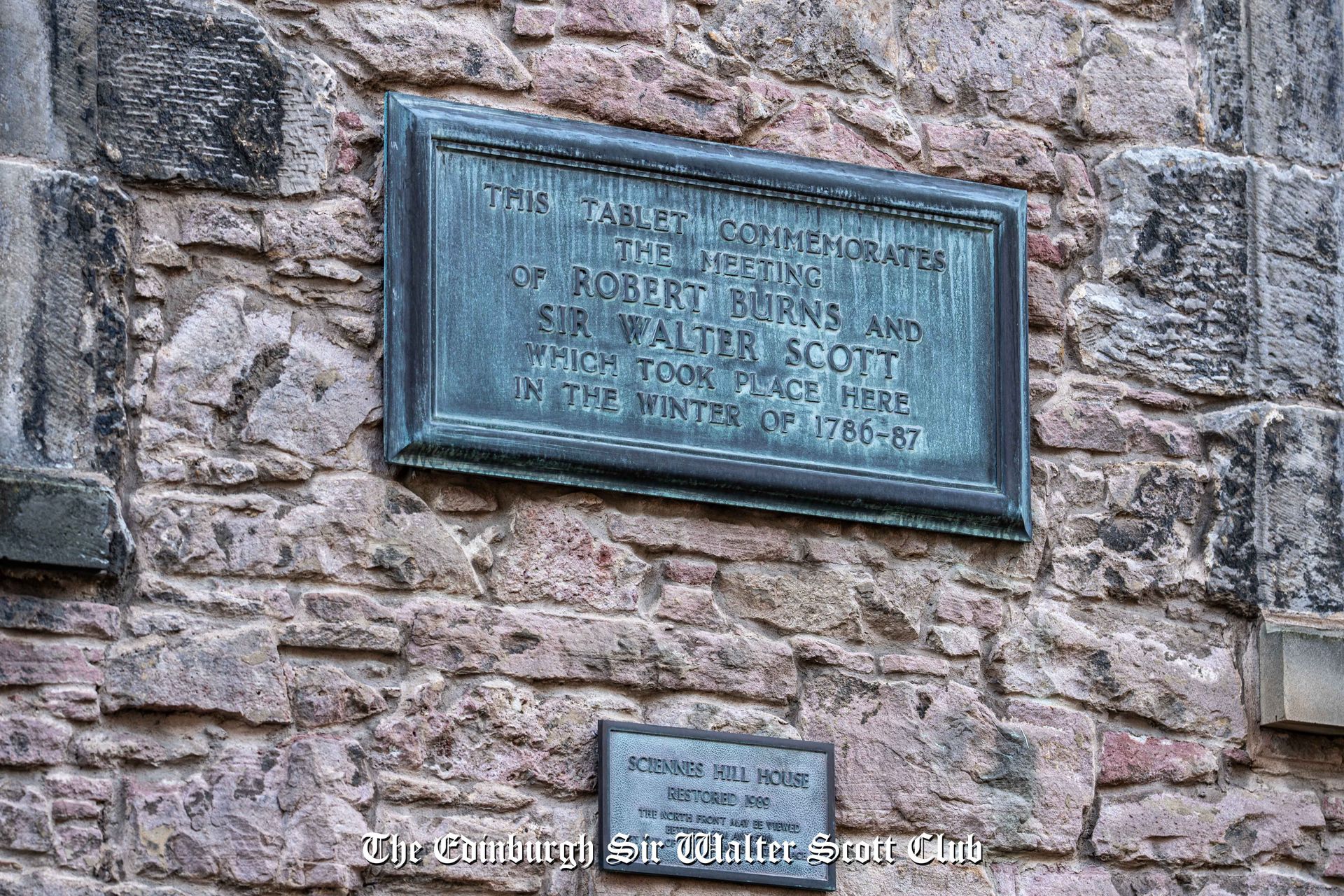
The original house was partly demolished in the nineteenth century and incorporated into the present terrace at Sciennes House Place. A commemorative plaque marks the site.
Accessibility:
Public street location (Exterior viewing only.)
Why This Place Matters
Sciennes Hill House is associated with the most fully recorded meeting between Sir Walter Scott and Robert Burns, the two figures who would later become Scotland’s most celebrated poets. The encounter took place during Burns’s first visit to Edinburgh in the winter of 1786–87, when the young Scott—then about fifteen years old—attended a literary gathering at the house.
Burns had travelled to Edinburgh following the success of the Kilmarnock edition of his poems and was welcomed into the intellectual circles of the city. The dinner at Sciennes Hill House brought him into contact with leading figures of the Scottish Enlightenment as well as younger admirers such as Scott.
The meeting left a lasting impression on Scott, who later described Burns as a man of powerful intellect and striking presence. For later generations the moment has come to symbolise the passing of inspiration between two great Scottish literary traditions: Burns' poetry of the late eighteenth century and Scott’s historical imagination in the nineteenth.
Historical Context
The house belonged to the philosopher Adam Ferguson, Professor of Moral Philosophy at the University of Edinburgh. Ferguson was an important figure in the intellectual life of the city, and his home served as a gathering place for scholars, writers, and scientists connected with the Scottish Enlightenment.
At the time of the meeting Burns was already a literary sensation in Edinburgh, while Scott was still a schoolboy beginning to develop his own literary interests. According to Scott’s later recollections, Burns impressed those present not only through his poetry but through the force of his conversation and personality.
Although Scott later hinted that he may also have glimpsed Burns at James Sibbald’s circulating library in Parliament Square, the gathering at Sciennes Hill House remains the best-documented occasion on which the two writers encountered one another.
Scott Here
Scott later described the evening in a letter to his son-in-law John Gibson Lockhart. During the gathering Burns examined a volume of engravings illustrating scenes from literature. One of the illustrations represented a scene from Kamtchatka, accompanied by lines of verse. Burns asked who had written them. When no one present answered, the young Scott quietly identified the author as John Langhorne. Burns acknowledged the response with a brief but approving remark.
Scott remembered the moment vividly, noting that it was the only time during the evening when he spoke directly in Burns’ presence. The incident left a lasting impression on him and became one of the most frequently quoted recollections of Burns’ visit to Edinburgh.
Although Scott later hinted that he may also have glimpsed Burns at James Sibbald’s circulating library in Parliament Square, the gathering at Sciennes Hill House remains the most fully recorded meeting between the two writers.
The Bigger Theme
The meeting at Sciennes Hill House represents a symbolic moment in Scotland’s literary history. Burns embodied the poetic voice of late eighteenth-century Scotland, while Scott would later reshape the nation’s cultural identity through historical poetry and the Waverley novels.
Although the meeting itself was brief, it has often been interpreted as a moment of transition between two generations of Scottish literary achievement.
Literary Connections
Burns’ visit to Edinburgh in 1786–87 coincided with the preparation of the Edinburgh edition of his poems, which established his national reputation. Scott, who admired Burns throughout his life, later played a significant role in preserving the poet’s legacy, notably through his efforts to support a monument to Burns at Alloway.
What to Notice On Site
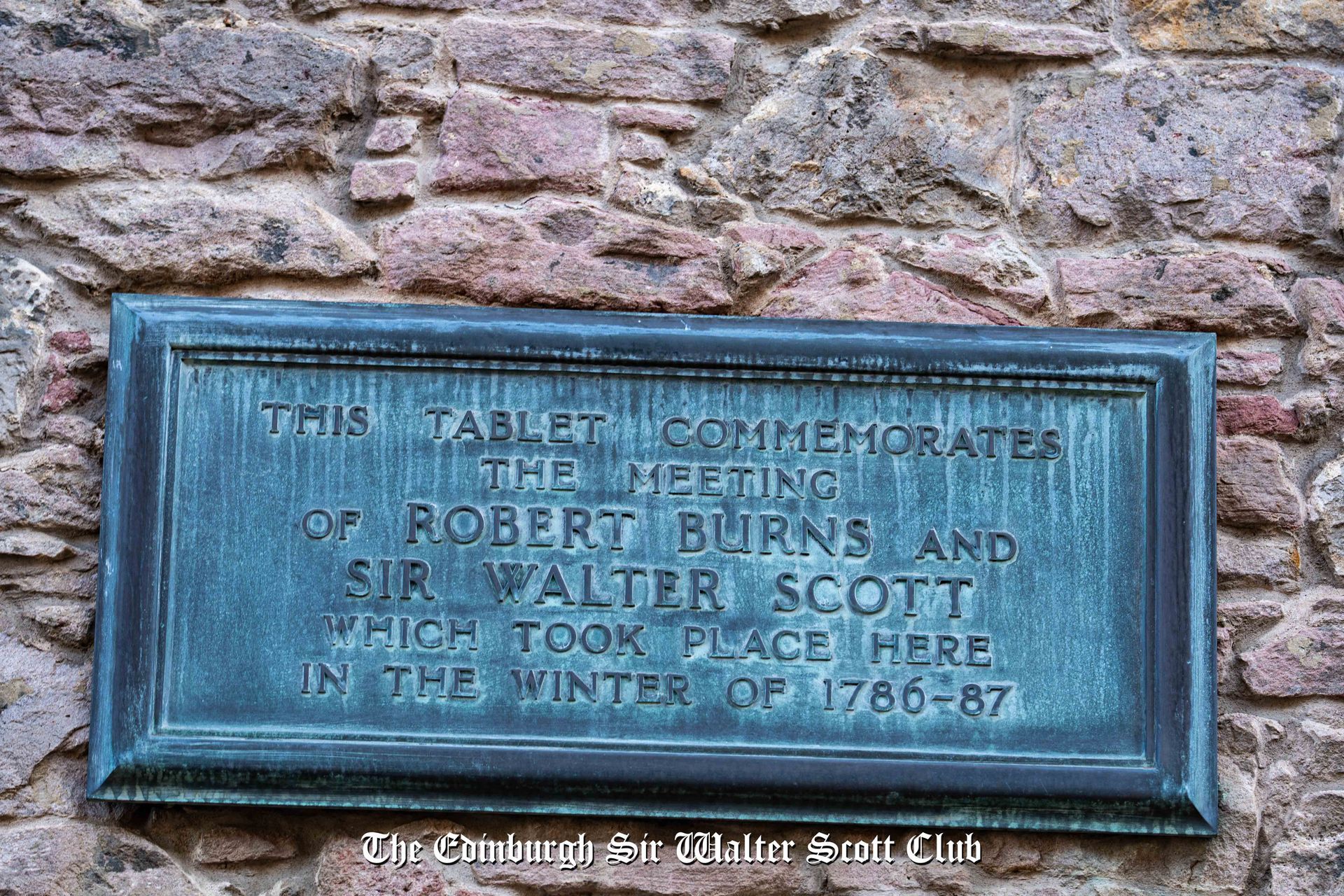
The present terrace at Sciennes House Place incorporates part of the original structure of Sciennes Hill House, though the building was heavily altered during later redevelopment. A bronze plaque on the exterior wall commemorates the meeting between Burns and Scott that took place here in the winter of 1786–87
The modern street name Sciennes House Place preserves the memory of the earlier building. Nearby streets and buildings reflect the later urban development of the area during the nineteenth century as the city expanded southwards.
Questions to Consider
How did the literary culture of Enlightenment Edinburgh shape the development of young writers such as Scott?
Why has the meeting between Burns and Scott come to symbolise a transition in Scottish literary history?
How do places connected with brief encounters acquire lasting cultural significance?
Further Reading
Lockhart, J. G. -
Memoirs of the Life of Sir Walter Scott.
“The Meeting Place of Sir Walter Scott and Robert Burns.”
Hutton, Laurence -Literary Landmarks of Edinburgh.
Did You Know
In 1927 the Edinburgh Sir Walter Scott Club and the Burns Association unveiled a commemorative tablet marking the site of the meeting between Burns and Scott. The event formally recognised the historical significance of the location.
Historical Images