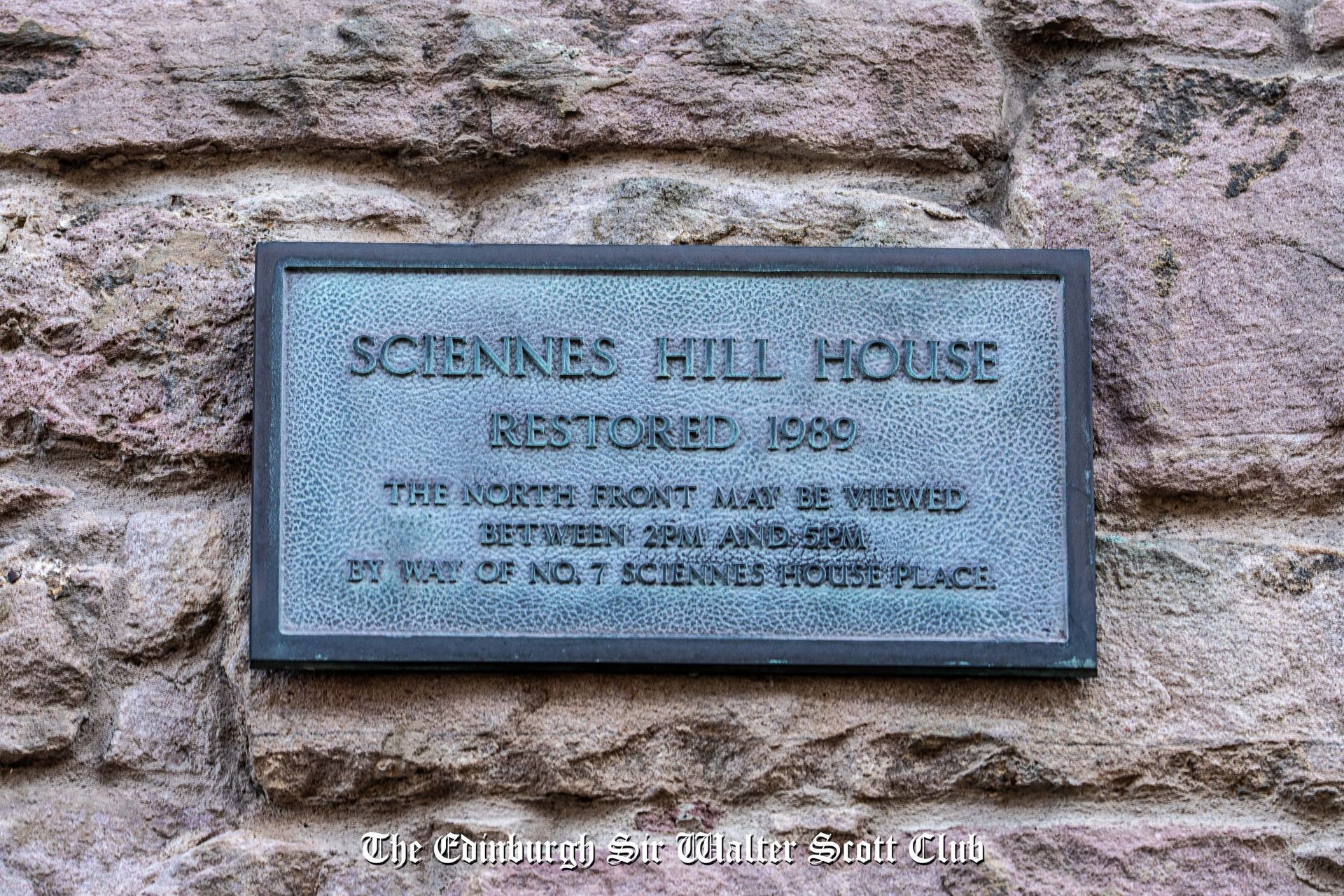

The Unveiling of a Tablet in Sciennes Hill House to Commemorate the Meeting of Scott and Burns
Saturday 12th March 1927
Summary of the Address:
Walter T. Watson’s speech at the unveiling on 12 March 1927 is strikingly reflective rather than merely ceremonial. Instead of simply celebrating the historical meeting of Robert Burns and Sir Walter Scott, he treats the moment as symbolic of two complementary forces in Scottish culture.
A few key themes stand out from the address :
First, the idea of spiritual foundations. Watson opens by referencing Robert Bridges’ wartime anthology The Spirit of Man, suggesting that Burns and Scott represent not merely literary achievement but spiritual influence in national life. He quotes Lord Rosebery’s famous phrases: “the Miracle called Burns” and “the divine Sir Walter Scott.”
Second, Burns and Scott as builders of Scotland’s place in the world. Watson draws a bold parallel: just as Wallace and Bruce established Scotland politically, Burns and Scott established a “Scots Empire” in the life of humanity. This is a cultural rather than territorial empire — literature as nationhood.
Third, their shared acceptance of social order. Watson argues — perhaps controversially — that both men accepted the social hierarchy of their time. He reads Burns’s “A Man’s a Man for a’ That” not as revolutionary slogan but as moral assertion within an existing structure. Scott’s longing for landownership is treated not as vanity but as rooted in a deep attachment to the soil.
Fourth, their imaginative kinship. Watson interestingly suggests that each possessed something of the other:
- Scott’s realism in humble life.
- Burns’s romantic chivalry (citing “Auld Lang Syne” and Jacobite songs).
- Their shared power over terror (Scott’s Wandering Willie’s Tale, Burns’s Tam o’ Shanter).
- Their capacity for passionate love, including Scott’s own early disappointment reflected in The Bride of Lammermoor.
Finally, their enduring spiritual companionship. Though they met only briefly in that house, Watson says they have “lived together through all the years,” shaping Scotland’s moral and imaginative life. Burns purified song; Scott wrote what was “pure… lovely… noble.”
The closing line is beautifully judged for a plaque ceremony:
“We leave their names here together carved on stone; we bear them away with us engraved on our hearts for ever.”
Download the [transcript] or read the [bulletin]
Download the [transcript] or read the [bulletin]
Joint meeting with the Burns Club
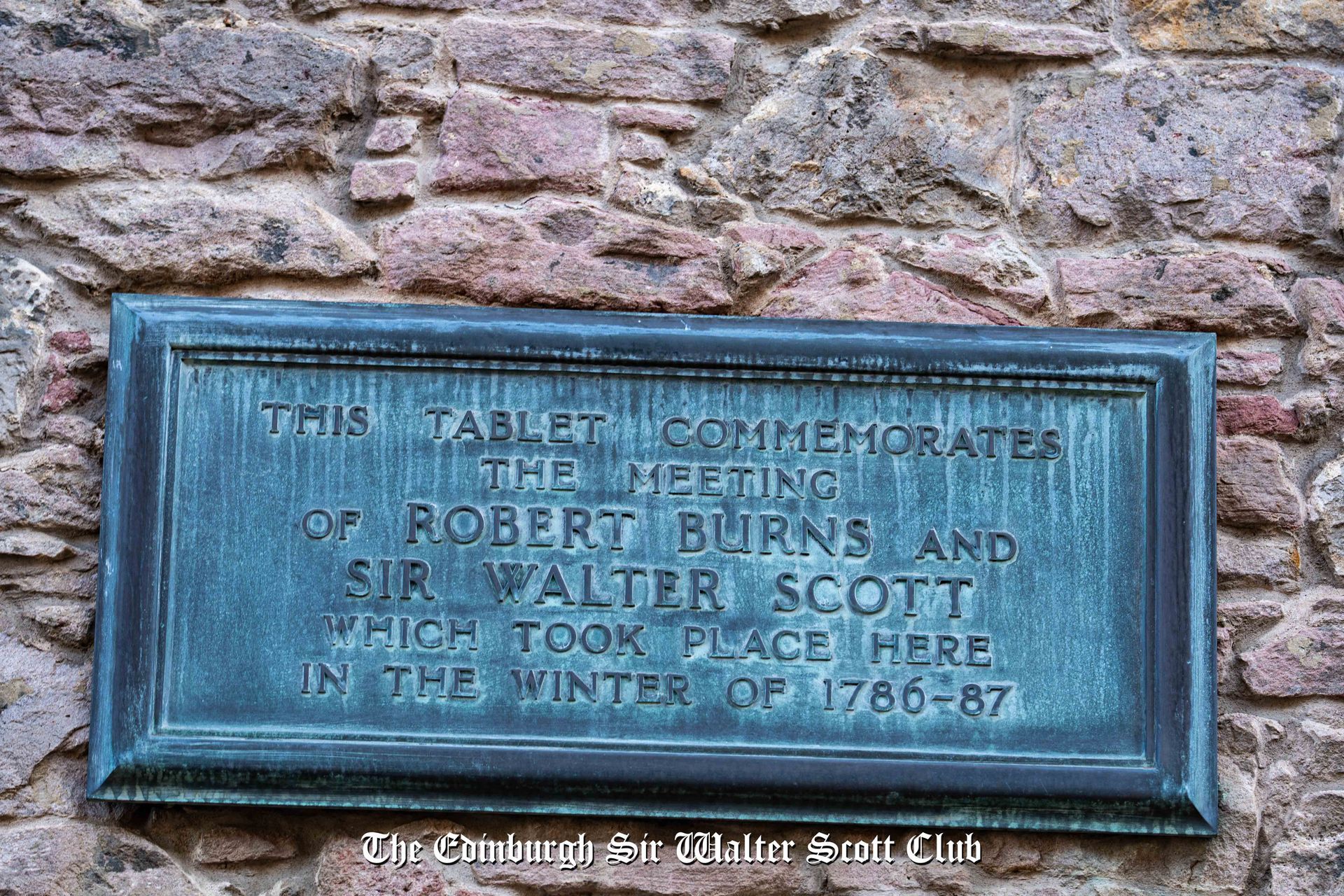
The commemorative tablet (above) marks the meeting of Robert Burns and Sir Walter Scott in the winter of 1786–87.
It remembers their famous encounter in Edinburgh during Burns’s first visit to the city after the success of the Kilmarnock Edition.
The meeting took place at the house of Professor Adam Ferguson, commonly identified as Sciennes Hill House.
Scott was only about fifteen at the time, while Burns was twenty-seven and already a celebrated poet. In later life Scott recalled the occasion vividly. He described Burns’s powerful dark eyes and remembered how Burns respectfully acknowledged a passage of poetry (from Langhorne’s translation of Ossian) when others present could not identify its source. Scott wrote that Burns’s expression seemed one of deep emotion and intellectual intensity.
The meeting became symbolically important: it represents a passing moment between two towering figures of Scottish literature—Burns at the height of his brief fame, and Scott at the very beginning of the life that would make him Scotland’s most influential novelist.