

Walking Tour: Stop M
James Ballantyne’s House
10 St John Street, Canongate, EH8 8DG

Residence of Scott’s printer and collaborator James Ballantyne in the Canongate printing district.
GPS Coordinates: 55°57'02.5"N 3°10'52.2"W
Scott Connection:
Residence of James Ballantyne, printer of the Waverley novels and one of Sir Walter Scott’s closest publishing collaborators.
Date Range Relevant to Scott: Early nineteenth century
Current Status:
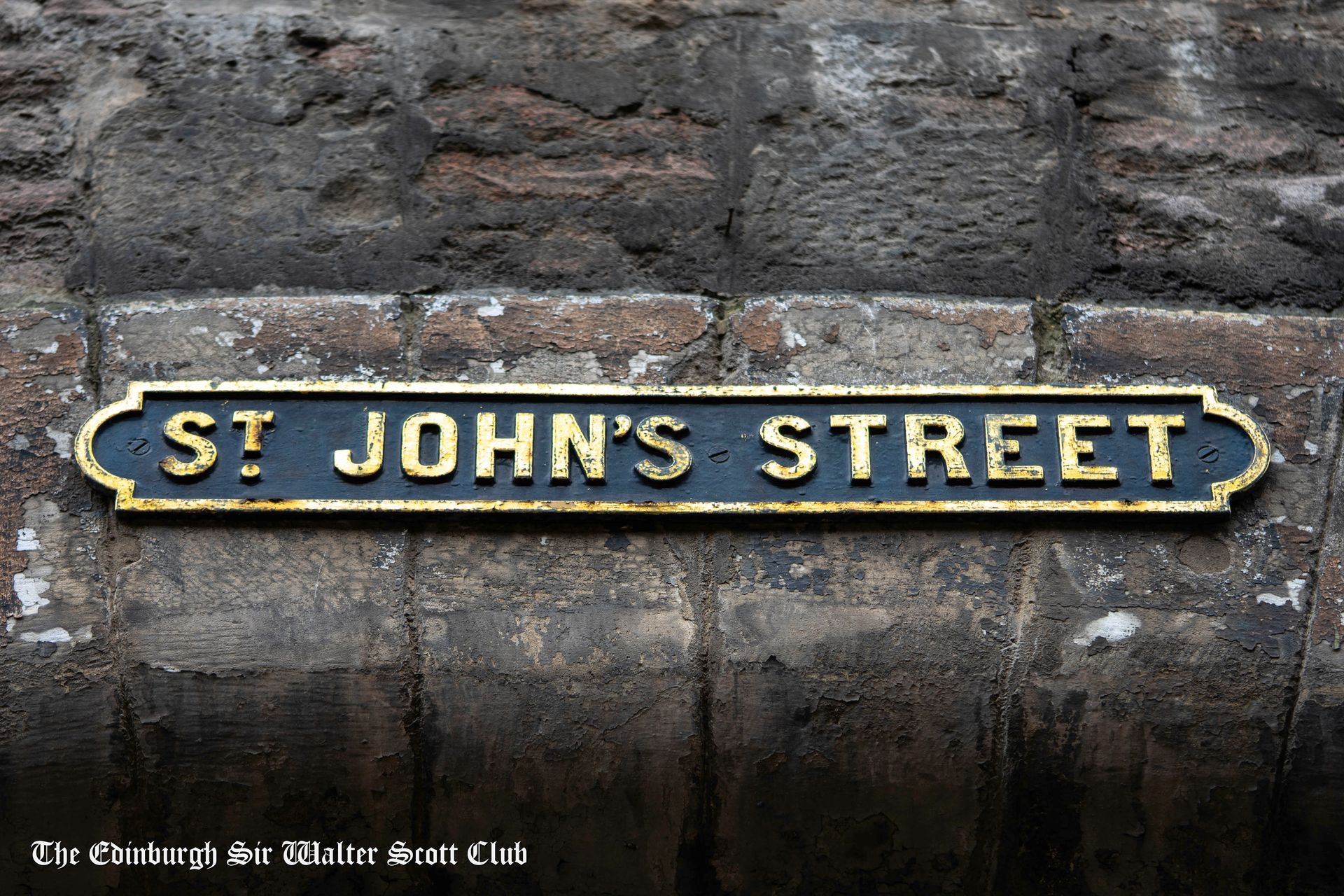
The original house has been demolished. The site is now marked by the entrance archway leading south from the Canongate into St John Street.
Accessibility:
Public street location. (Exterior viewing only.)
Why This Place Matters
The house at 10 St John Street was the residence of James Ballantyne, the printer who worked in close partnership with Sir Walter Scott throughout the most productive years of his literary career. While Scott wrote the manuscripts of the Waverley novels, Ballantyne oversaw their printing and frequently acted as the first reader of Scott’s drafts and proofs.
Ballantyne’s home stood close to the printing premises at Paul’s Work on the North Back Canongate, allowing him easy access to the presses that produced Scott’s books. The proximity of house and printing office reflects the tightly interconnected geography of Edinburgh’s early nineteenth-century publishing world.
Historical Context
The houses of St John Street formed a small terrace of elegant eighteenth-century residences with notable views towards Salisbury Crags. The street attracted a number of prominent residents connected with Edinburgh’s intellectual and literary life.
Earlier inhabitants included the philosopher Lord Monboddo, while the novelist Tobias Smollett is also associated with the street. During Ballantyne’s own period of residence, the novelist Mary Brunton and her husband were among the neighbours.
Although the houses themselves no longer survive, the surviving entrance from the Canongate still indicates the position of this once fashionable residential enclave.
Scott Here
Scott was a frequent visitor to Ballantyne’s house in St John Street. Their collaboration involved constant exchanges of manuscripts and proofs as Scott’s works moved from composition to print.
Lockhart records that the house was also the scene of lively gatherings connected with the publication of Scott’s novels. On one occasion, during the launch of The Heart of Mid-Lothian, a celebratory dinner at Ballantyne’s house reportedly became a particularly exuberant occasion among the circle of Scott’s literary associates.
Such gatherings illustrate the social dimension of the partnership between author and printer, in which literary production was accompanied by convivial discussion and celebration.
The Bigger Theme
Ballantyne’s house highlights the collaborative nature of literary production in the early nineteenth century. Scott’s novels were not produced in isolation but through the combined efforts of authors, printers, publishers, and booksellers.
The location therefore represents the domestic side of the publishing partnership that helped transform Scott’s writing into one of the most successful literary enterprises of the nineteenth century.
Literary Connections
Many of Scott’s major works passed through Ballantyne’s press. The Waverley novels, published anonymously from 1814 onwards, were printed and prepared under Ballantyne’s supervision.
The partnership helped establish Edinburgh as a leading centre of historical fiction during the early nineteenth century and played a crucial role in disseminating Scott’s works to a wide readership.
What to Notice On Site
The original houses of St John Street have been demolished, but the arched entrance leading south from the Canongate still marks the access to the street where Ballantyne lived.
Standing here also places visitors close to other sites connected with the production of the Waverley novels, including the printing premises at Paul’s Work nearby.
Questions to Consider
How did printers and publishers influence the final form of nineteenth-century literary works?
What does Ballantyne’s partnership with Scott reveal about the collaborative nature of authorship?
How did Edinburgh’s printing industry contribute to the city’s literary reputation?
Further Reading
Lockhart, J. G. -
Memoirs of the Life of Sir Walter Scott.
Millgate, Jane. -Walter Scott: The Making of the Novelist.
Hutton, Laurence. -Literary Landmarks of Edinburgh.
Barrell, John. - The Political Theory of the Scottish Novel.
Cadell, Patrick - Walter Scott: The Man and the Printer.
Garside, Peter - Edinburgh Locations and the Production of the Waverley Novels
Did You Know?
James Ballantyne was not only Scott’s printer but also one of the first readers of many of his manuscripts, frequently reviewing proofs and offering suggestions before publication.