
Reading Scott:
Waverley
(Chapter 22) Highland Minstrelsy
Read by Prof. Peter Garside
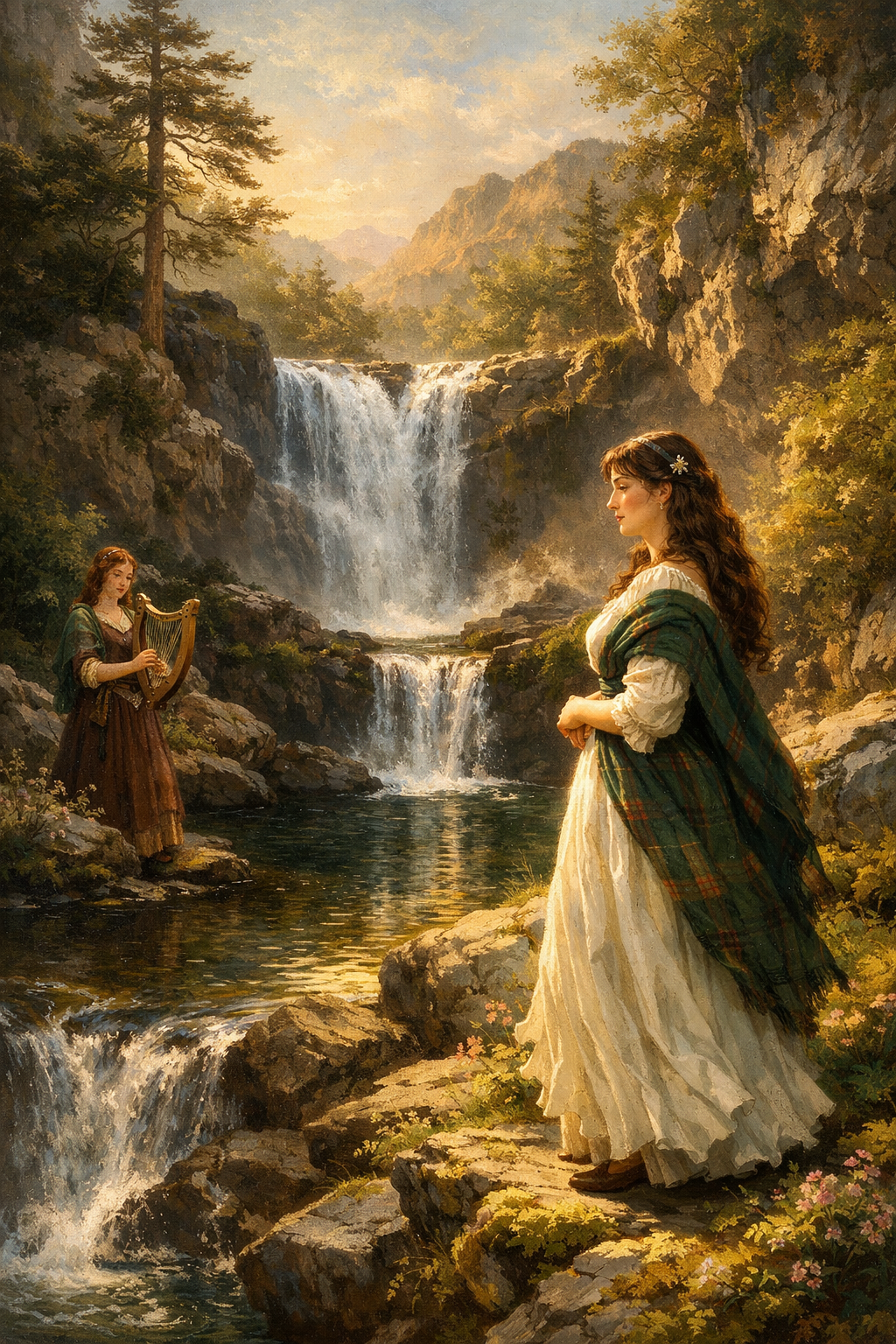
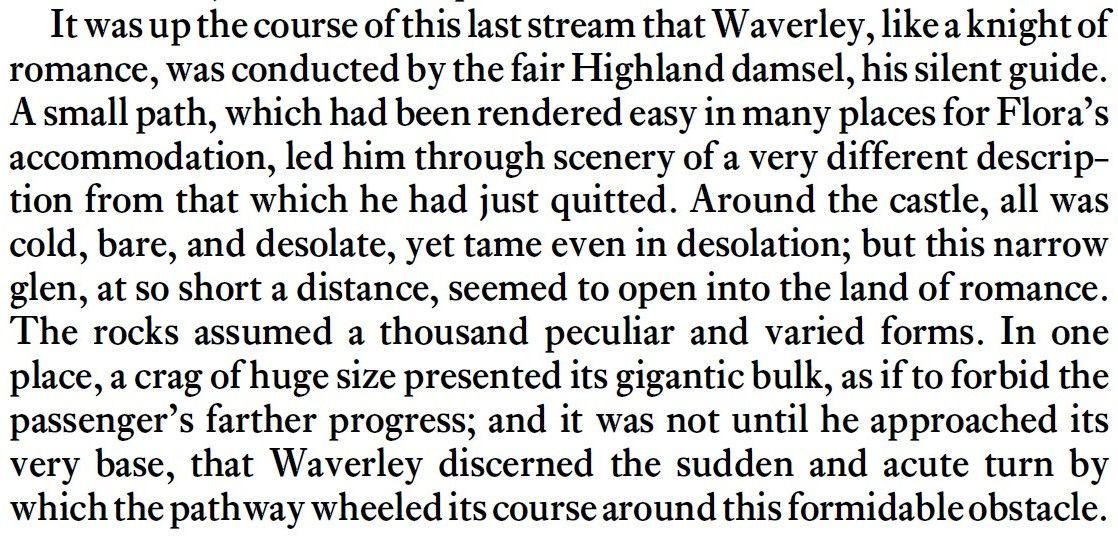
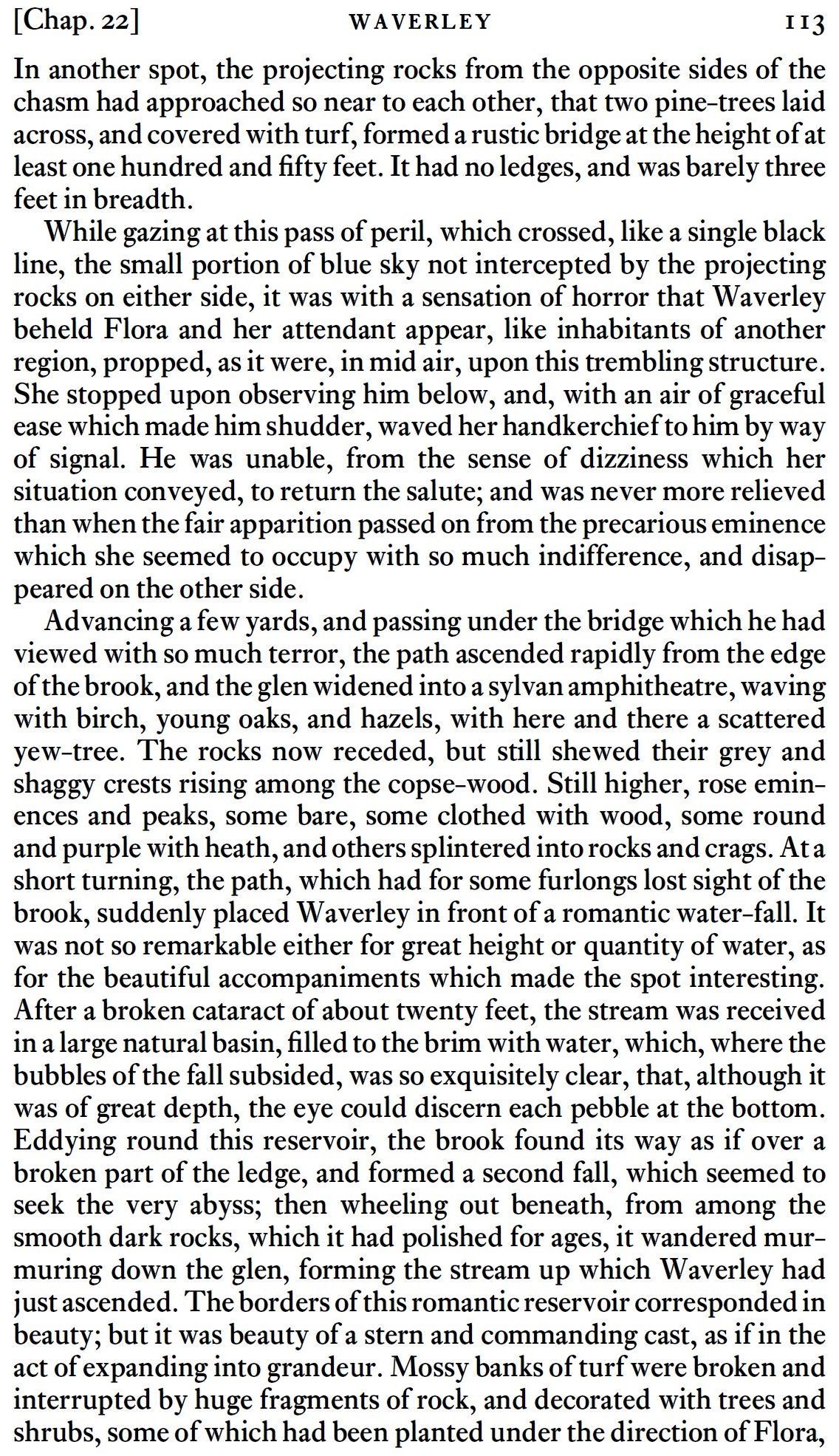
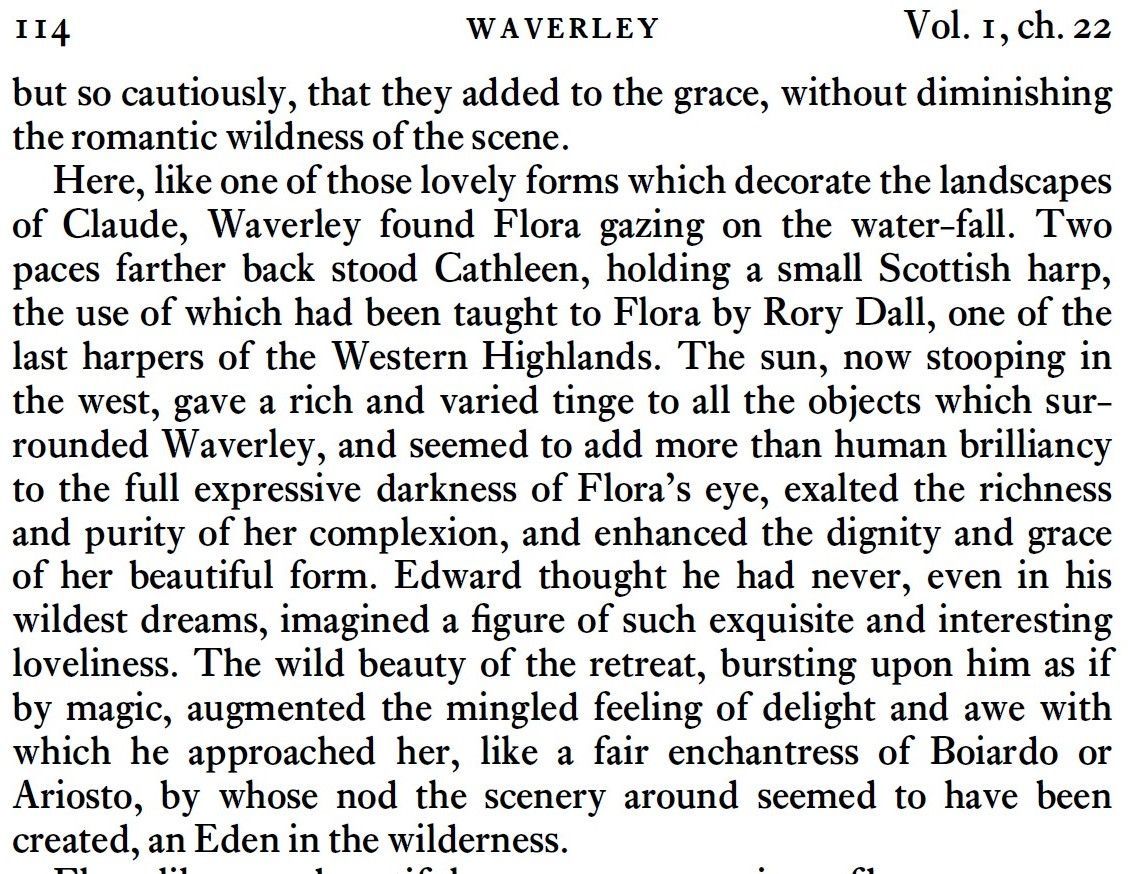
In this passage the young and impressionable Edward Waverley, having already experienced a close-up view of the cruder hierarchical aspects of clan life at Glennaquoich, proceeds through an idealised Highland landscape for an assignation with Flora Mac-Ivor, sister of the ambitious clan-leader Fergus. Immediately following this Flora performs a song for her admirer, himself a Hanoverian officer, filled with references to Jacobite Highland clan-leaders, and clearly aimed at enticing Waverley to join the impending 1745 Rising. The surrounding Highland scenery, in conveying which Scott uses the full force of picturesque description, reinforces the sense of an entrancing romance world, analogous with the appeals of sentimental Jacobitism. The likening of this setting and the figures it contains to the landscapes of Claude Lorraine (less appropriately transferred to Poussin in later editions) is extremely well calculated: much prized by aristocratic collectors in Scott’s time, these paintings were celebrated for their evocation of departed classical glories and ethereal evening atmospherics. While Scott might seem here to be proceeding at full throttle in glorifying the scene, closer attention shows a number of small braking points in the description, such as in the seemingly ‘more than human brilliancy’ in Flora’s eye. Elsewhere Waverley will suffer more sudden moments of bathetic deflation. Even so, there can be little doubt of the huge appeal of this description to (especially) English readers, this adding to the wave of tourists in pursuit of similar settings in areas such as the Trossachs. The popularity of the incident is also reflected in the number of contemporary illustrations showing Flora at the Waterfall.
July 2020
Professor Peter Garside is a scholar of English literature, educated at Cambridge and Harvard. He taught for over thirty years at Cardiff University and later became Professor of Bibliography and Textual Studies at the University of Edinburgh. He has edited major works by Walter Scott and James Hogg and contributed to bibliographical studies of eighteenth–nineteenth-century fiction.