
The Ballantyne Plaque in Canongate Kirkyard
Unveiled: 20th June 1953
A memorial to Sir Walter Scott’s printer and friend
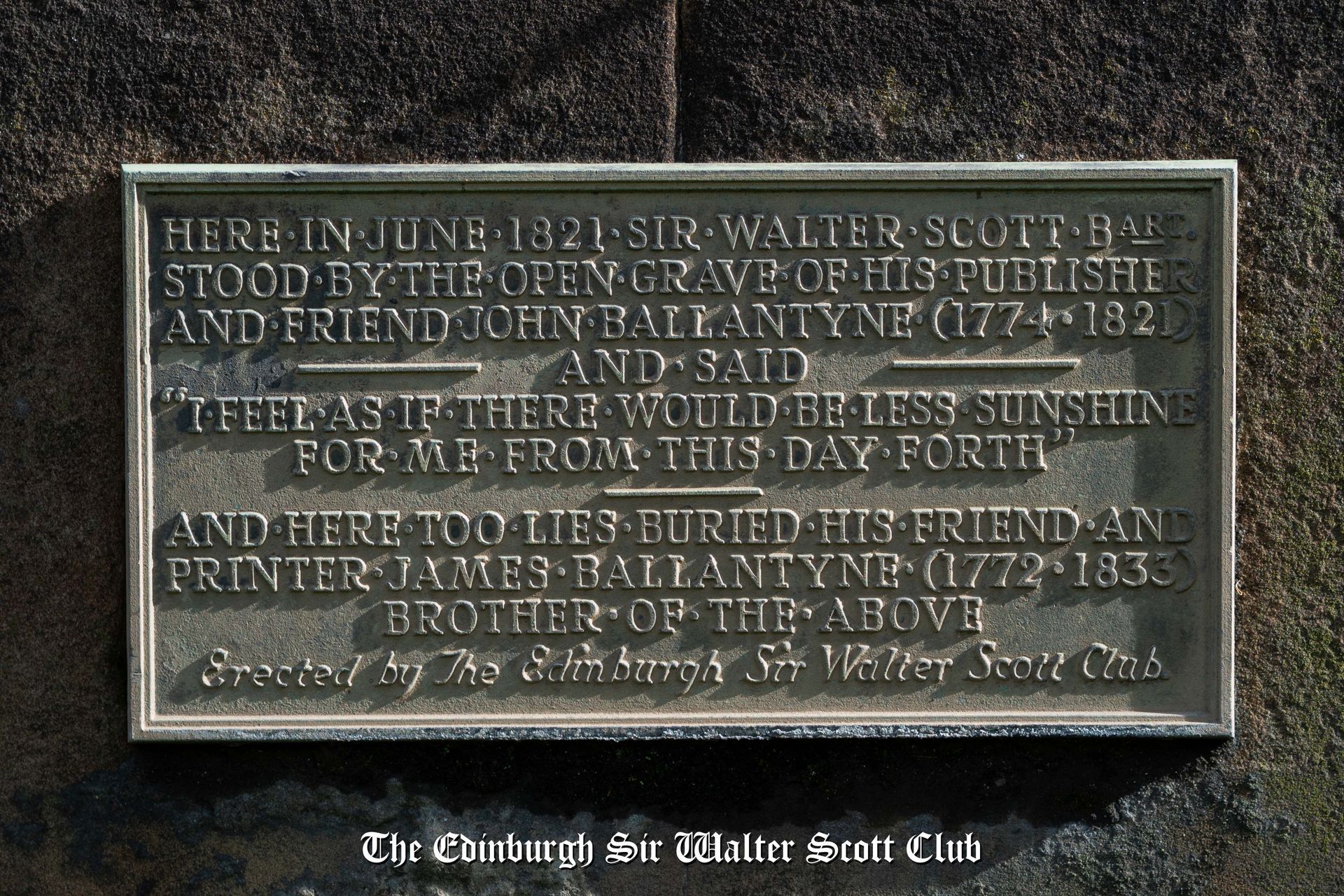
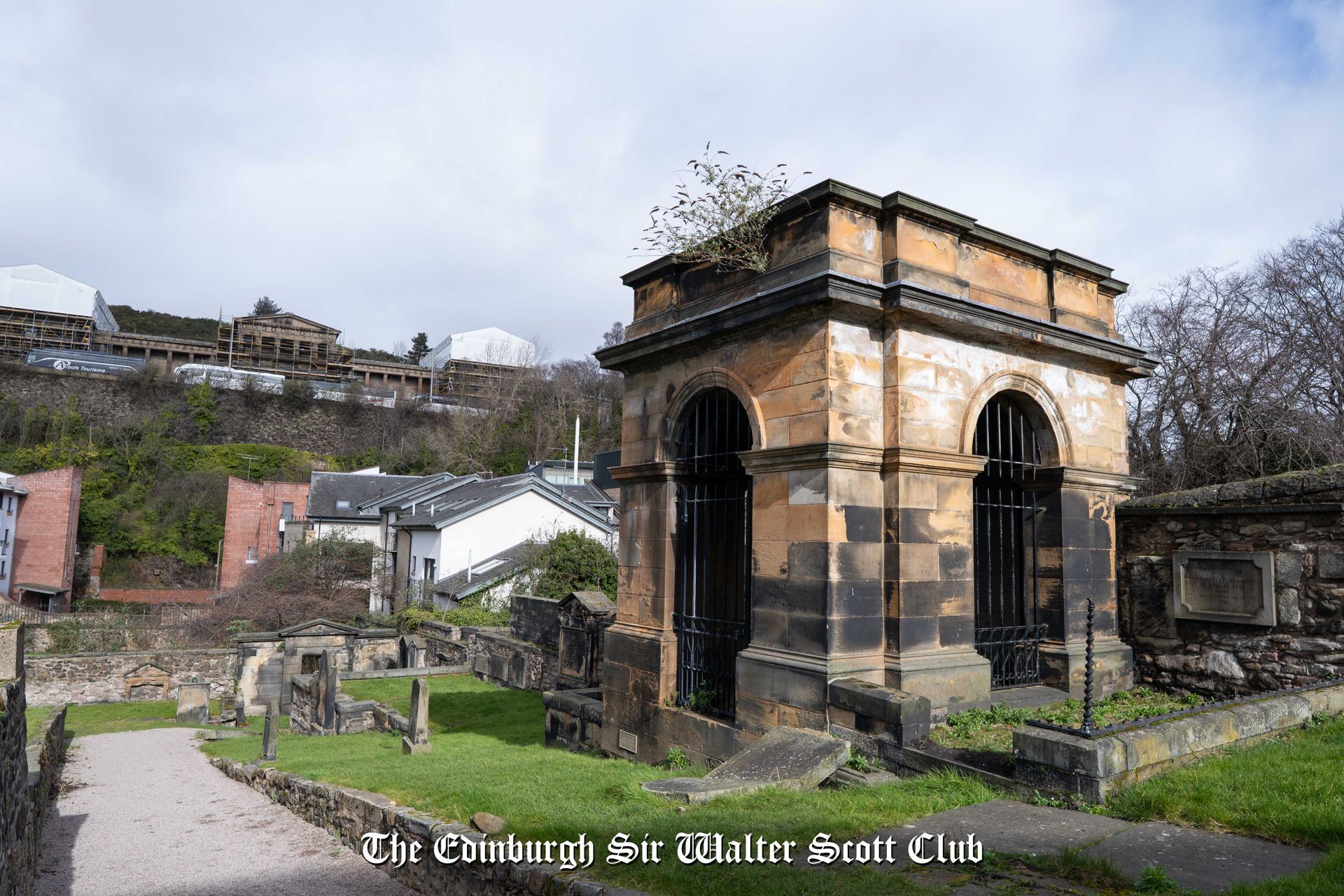
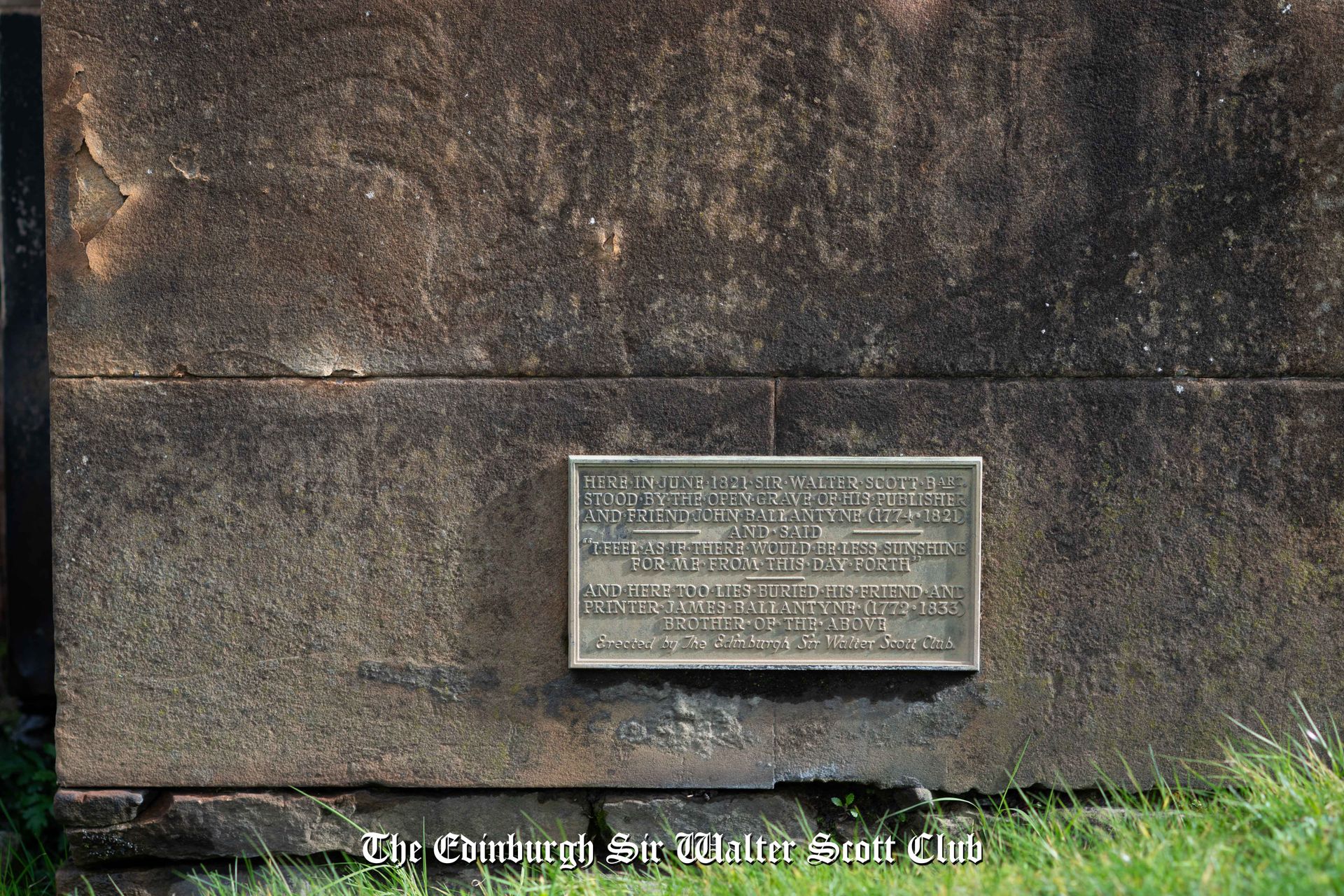
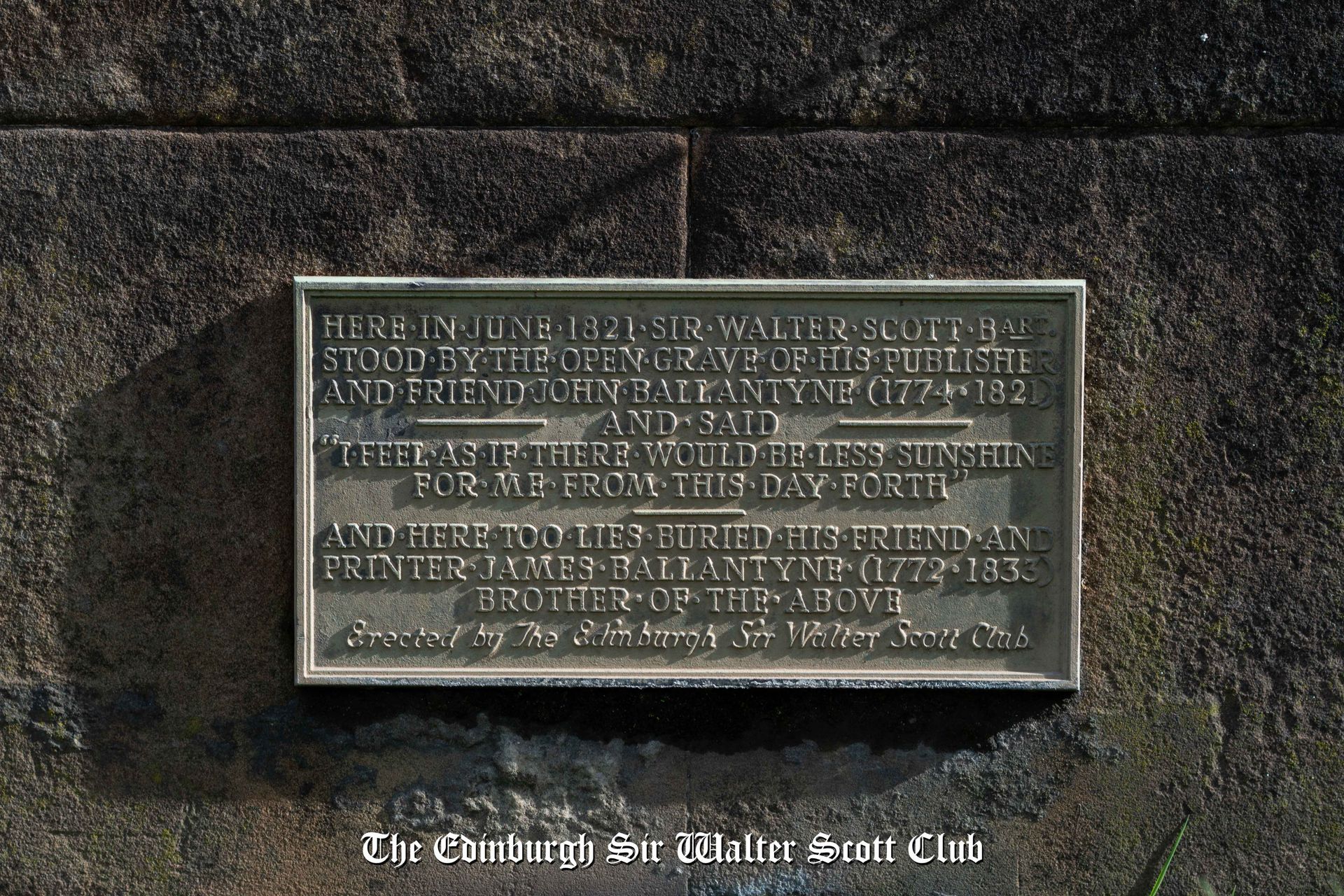
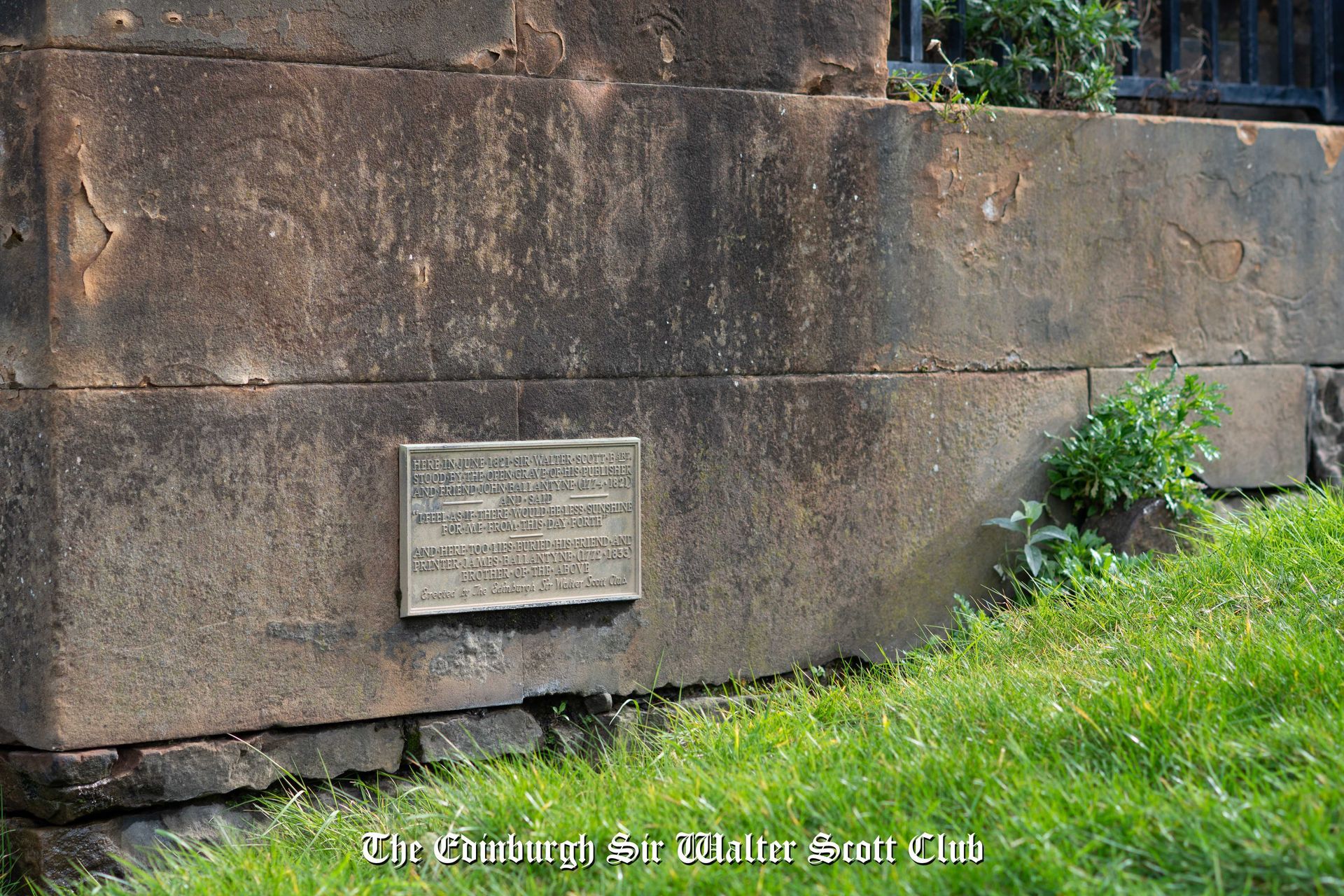
Near the grave of John Ballantyne in Canongate Kirkyard stands a bronze plaque erected by the Edinburgh Sir Walter Scott Club.
It records the famous words spoken by Scott when standing beside Ballantyne’s open grave in June 1821:
“I feel as if there would be less sunshine for me from this day forth.”
For many years the grave of the Ballantyne brothers — John and James — lay in the kirkyard with little to mark its literary significance. In 1953 the Scott Club resolved to change that.
The Decision to Erect a Plaque
The story begins in the Council minutes of the Edinburgh Sir Walter Scott Club in 1952.
During a meeting held at 10 Atholl Crescent on 7 July 1952, Dr Oliver reported that he had visited the Canongate churchyard with Mr Laurie and had brought before the Council a draft design for a commemorative plaque to mark the Ballantyne grave.
Technical advice had already been sought from Mr Robert Hurd, and the Council agreed to obtain competitive estimates from Edinburgh firms before proceeding.
A small sub-committee was appointed to take the matter forward.
Planning the Memorial
By October 1952 the proposal had progressed further.
The Council formally referred the matter of the Ballantyne grave to a sub-committee consisting of:
Dr Oliver, Mr D. G. Scott Moncrieff and the Secretary.
Two estimates had been received for the production of the plaque, and the committee recommended accepting the quotation from a Scottish firm.
Members attending the Club’s annual dinner were to be invited to contribute towards the cost.
The Plaque Commissioned
At the Council meeting of 12 February 1953, the plaque — supplied by Messrs McDonald & Enewick Ltd. — was presented for approval.
The cost was recorded as £33 12s 6d.
The Council approved the design and arrangements were made for the unveiling.
It was agreed that the plaque should be unveiled in June, the anniversary month of John Ballantyne’s death.
Preparations for the Ceremony
At a further meeting on 23 March 1953, the Secretary reported that subscriptions were being collected to help meet the cost.
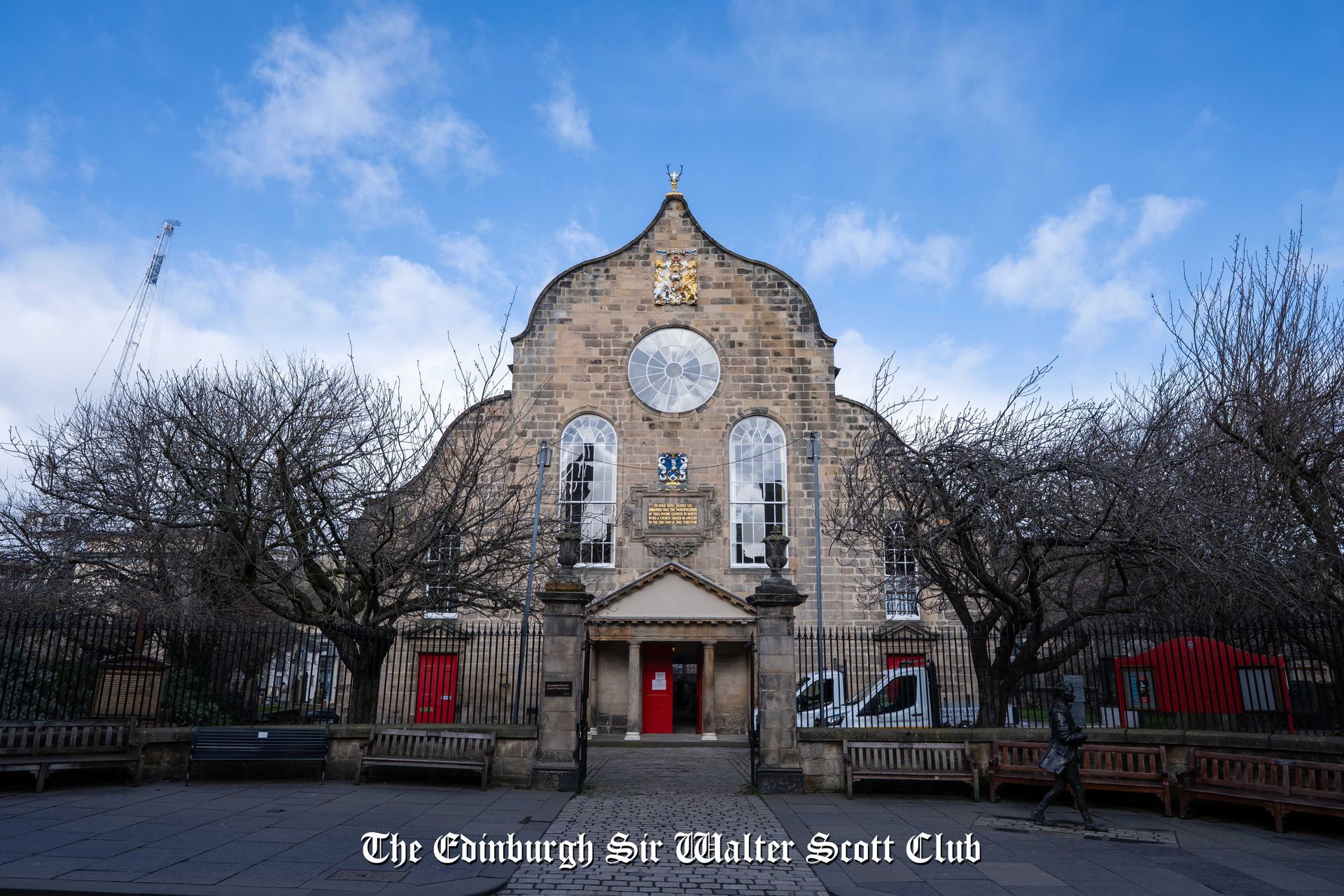
The Reverend Selby Wright, minister of Canongate Kirk, offered the use of the church for the occasion.
The Council also agreed to invite Eric Linklater, the Club’s President for 1952–53, to preside if available.
Arrangements for the ceremony were placed in the hands of a small organising committee.
The Unveiling on 20th June 1953
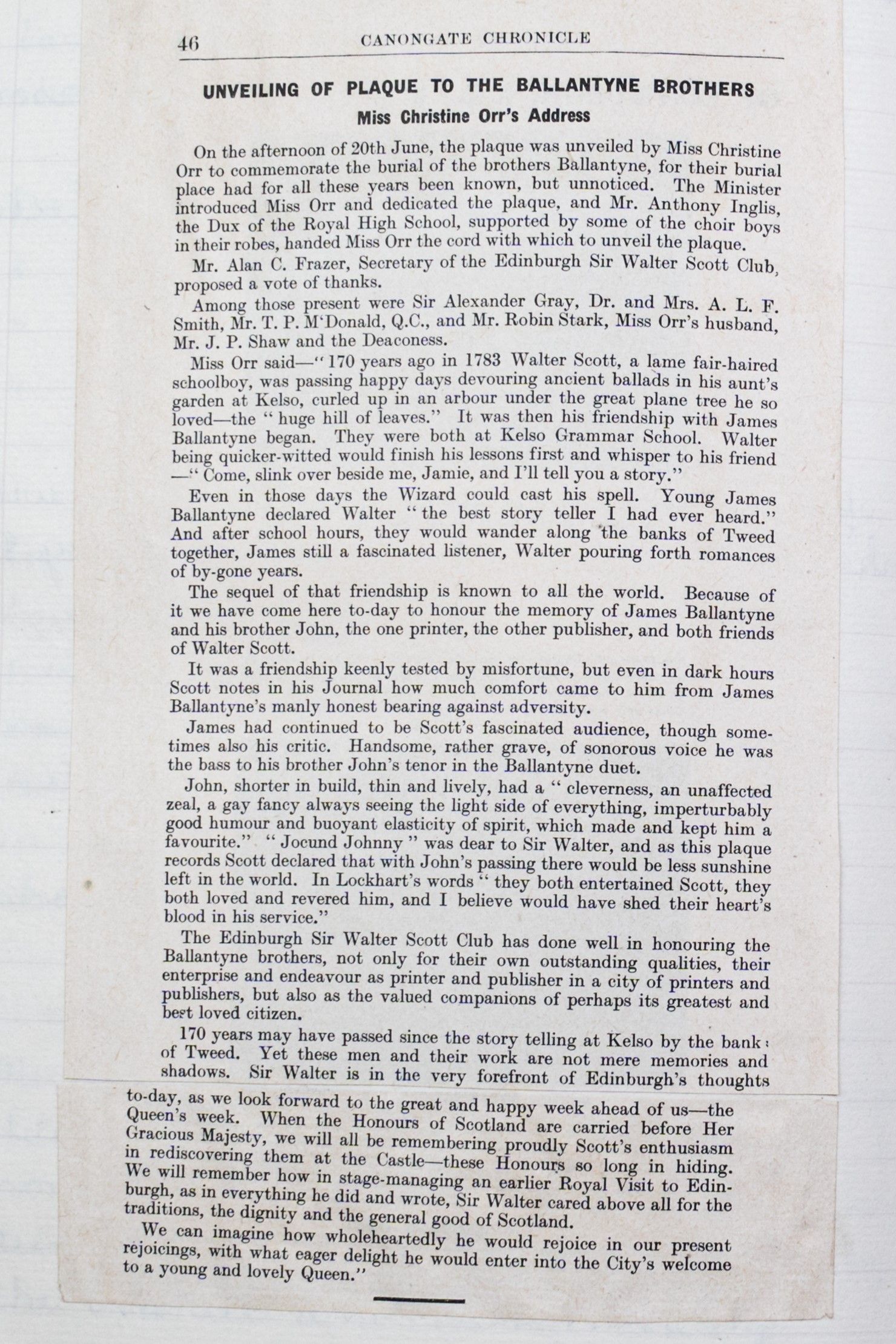
The plaque was unveiled in Canongate Kirkyard on the afternoon of 20 June 1953 during a small but dignified ceremony organised by the Edinburgh Sir Walter Scott Club. The memorial was unveiled by Miss Christine Orr, who delivered an address recalling the long friendship between Sir Walter Scott and the Ballantyne brothers.
The Rev. Selby Wright, minister of Canongate Kirk, introduced Miss Orr and dedicated the plaque. The unveiling itself was assisted by Anthony Inglis, Dux of the Royal High School, who handed Miss Orr the cord used to reveal the memorial, while members of the school choir attended in their robes.
Those present included Sir Alexander Gray, Dr and Mrs A. L. F. Smith, Mr T. P. McDonald, Q.C., Mr J. P. Shaw, and Mr Robin Stark, Miss Orr’s husband. The vote of thanks was proposed by Alan C. Frazer, Secretary of the Edinburgh Sir Walter Scott Club.
In her speech Miss Orr reminded those present that the friendship between Scott and James Ballantyne began during their schooldays in Kelso, when Scott would whisper to his friend, “Come, slink over beside me, Jamie, and I’ll tell you a story.” James Ballantyne later declared Scott to be “the best storyteller I had ever heard.” The friendship, she observed, endured through both literary triumph and financial adversity, and it was in recognition of that lifelong partnership that the plaque was erected.
Key Quotes from Miss Christine Orr’s Address
On Scott and Ballantyne as schoolboys:
“Walter Scott, a lame fair-haired schoolboy, was passing happy days devouring ancient ballads in his aunt’s garden at Kelso… It was then his friendship with James Ballantyne began.”
On their lifelong friendship:
“It was a friendship keenly tested by misfortune, but even in dark hours Scott notes in his Journal how much comfort came to him from James Ballantyne’s manly honest bearing against adversity.”
On the character of the brothers:
About James Ballantyne:
“Sometimes also his critic… the bass to his brother John’s tenor in the Ballantyne duet.”
About John Ballantyne:
“John, shorter in build, thin and lively, had a cleverness, an unaffected zeal… a buoyant elasticity of spirit.”
Scott and the Ballantyne Brothers
Miss Orr’s address reminded those present that Scott’s friendship with the Ballantyne family began during his schooldays in Kelso, where he and James Ballantyne were pupils together.
In later life the Ballantynes became central figures in Scott’s literary career.
James Ballantyne acted as Scott’s printer and editorial adviser, while John Ballantyne served as publisher and business partner.
Their partnership helped bring many of Scott’s greatest works into print.
Yet it also bound them together during the financial crisis of 1826, when the collapse of the Ballantyne printing business left Scott burdened with enormous debts.
“Less Sunshine”
John Ballantyne died on 26 June 1821.
Scott stood beside the grave in Canongate Kirkyard and spoke the words that now appear on the plaque:
“I feel as if there would be less sunshine for me from this day forth.”
The sentiment captured the deep personal loss Scott felt at the death of one of his closest friends.
The Cost of the Memorial
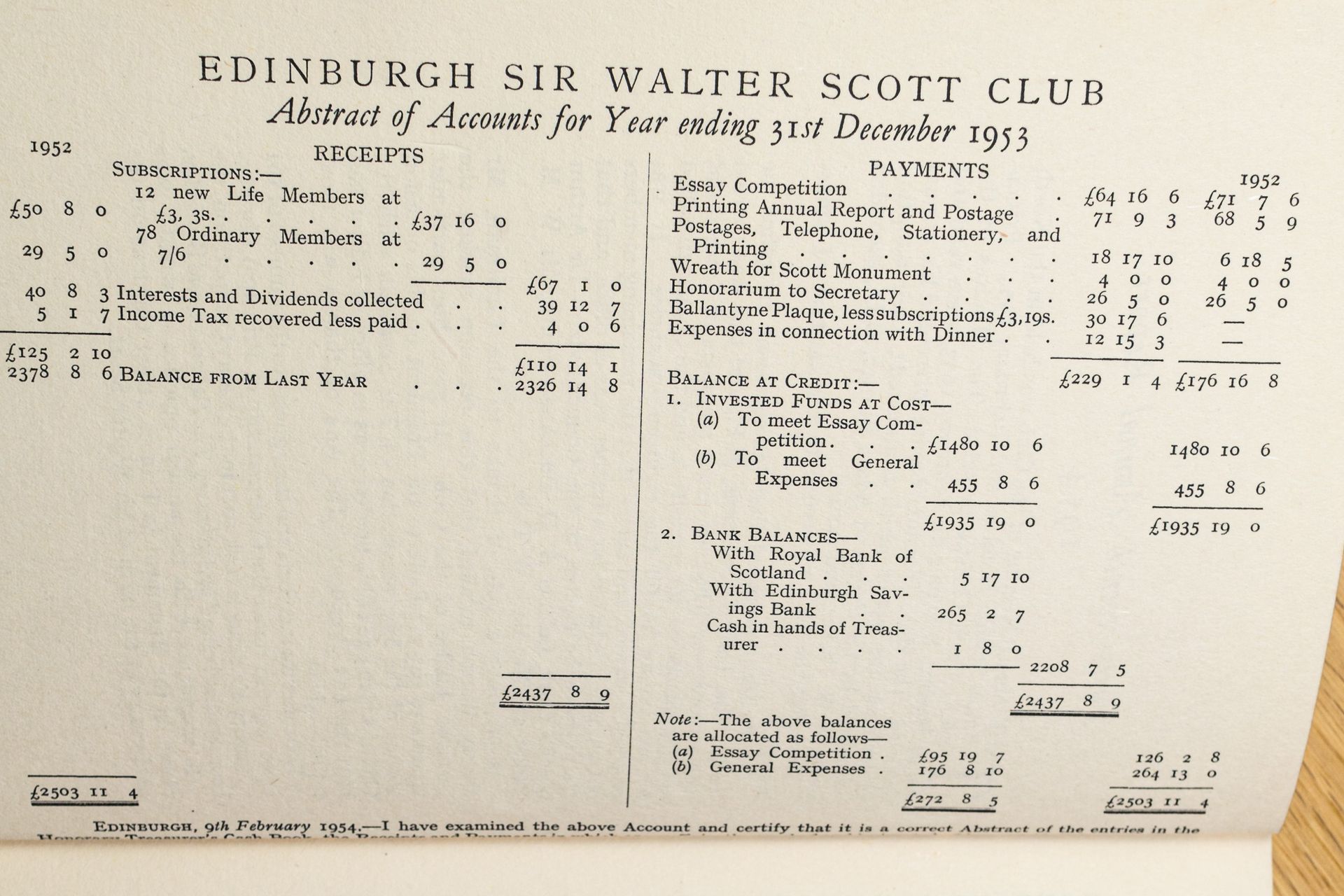
The Club accounts for 1953 record the financial side of the project.
The Ballantyne plaque appears in the payments column as:
Ballantyne Plaque — £30 17s 6d (after subscriptions)
This reflects the balance paid by the Club after contributions from members helped meet the overall cost.
A Memorial Rediscovered
Today the plaque remains a quiet but powerful memorial in Canongate Kirkyard.
It commemorates not only John Ballantyne, but also the extraordinary literary partnership that helped bring the works of Sir Walter Scott to the world.
By marking the grave in this way, the Edinburgh Sir Walter Scott Club ensured that the friendship between Scott and the Ballantyne brothers would not be forgotten.
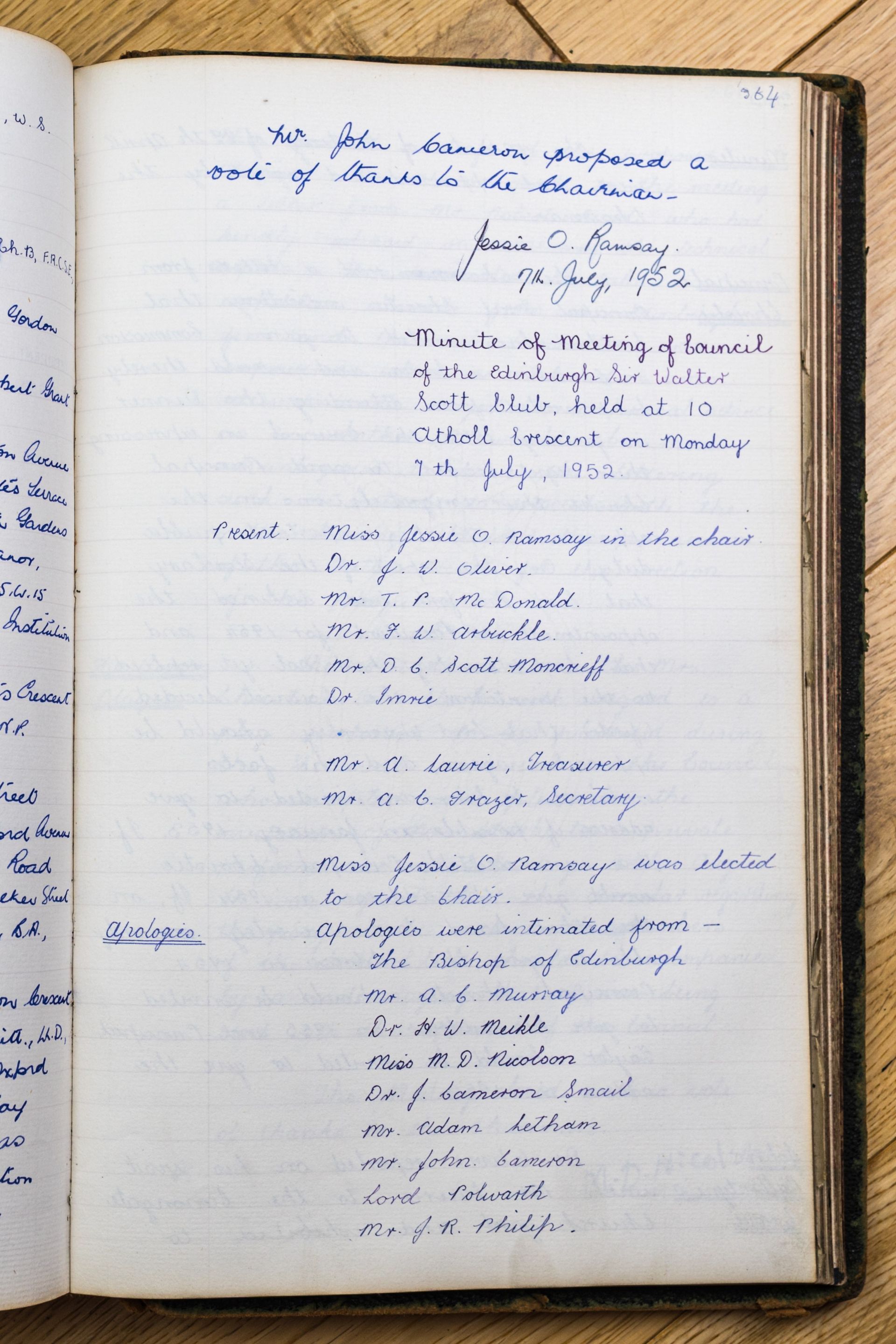
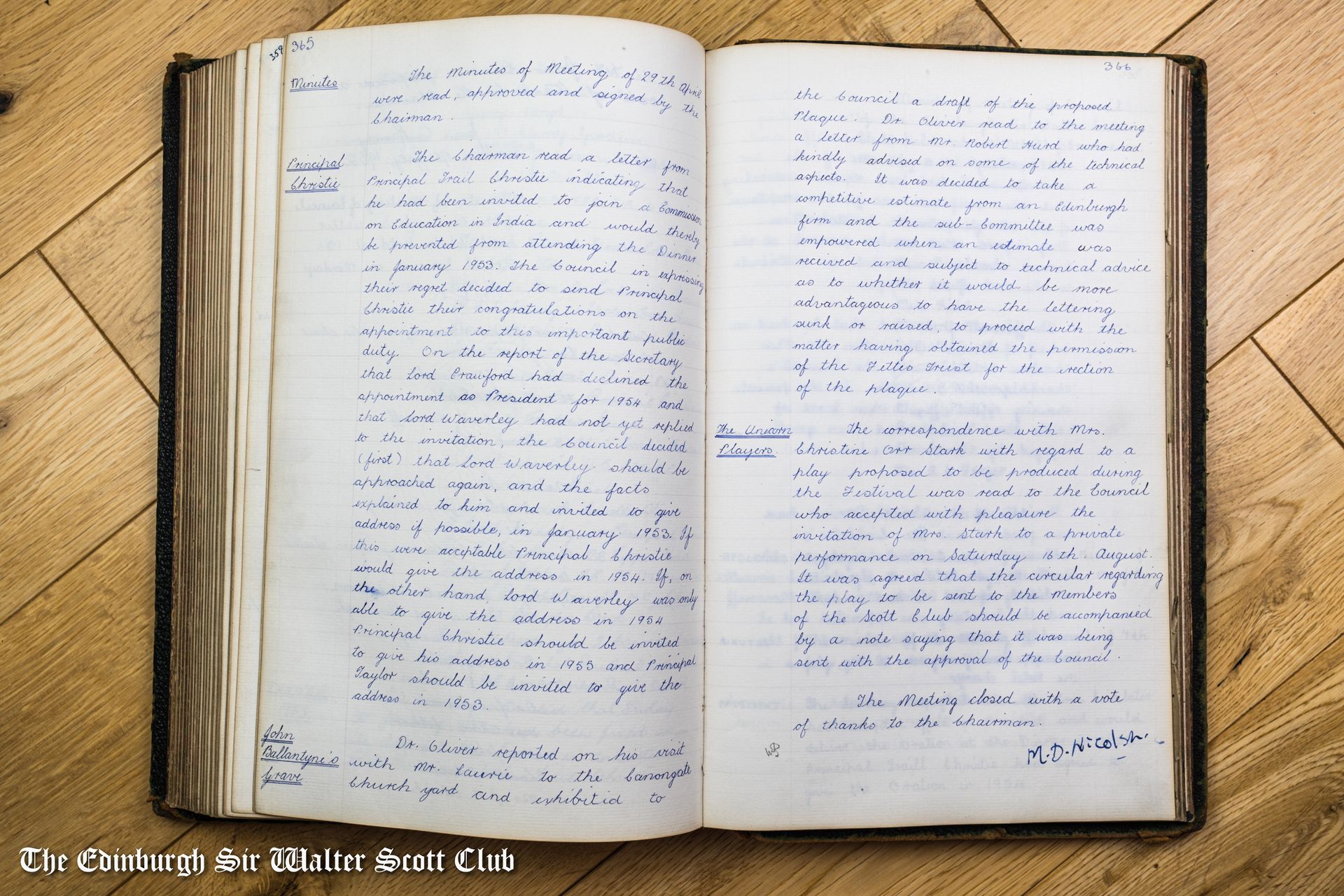
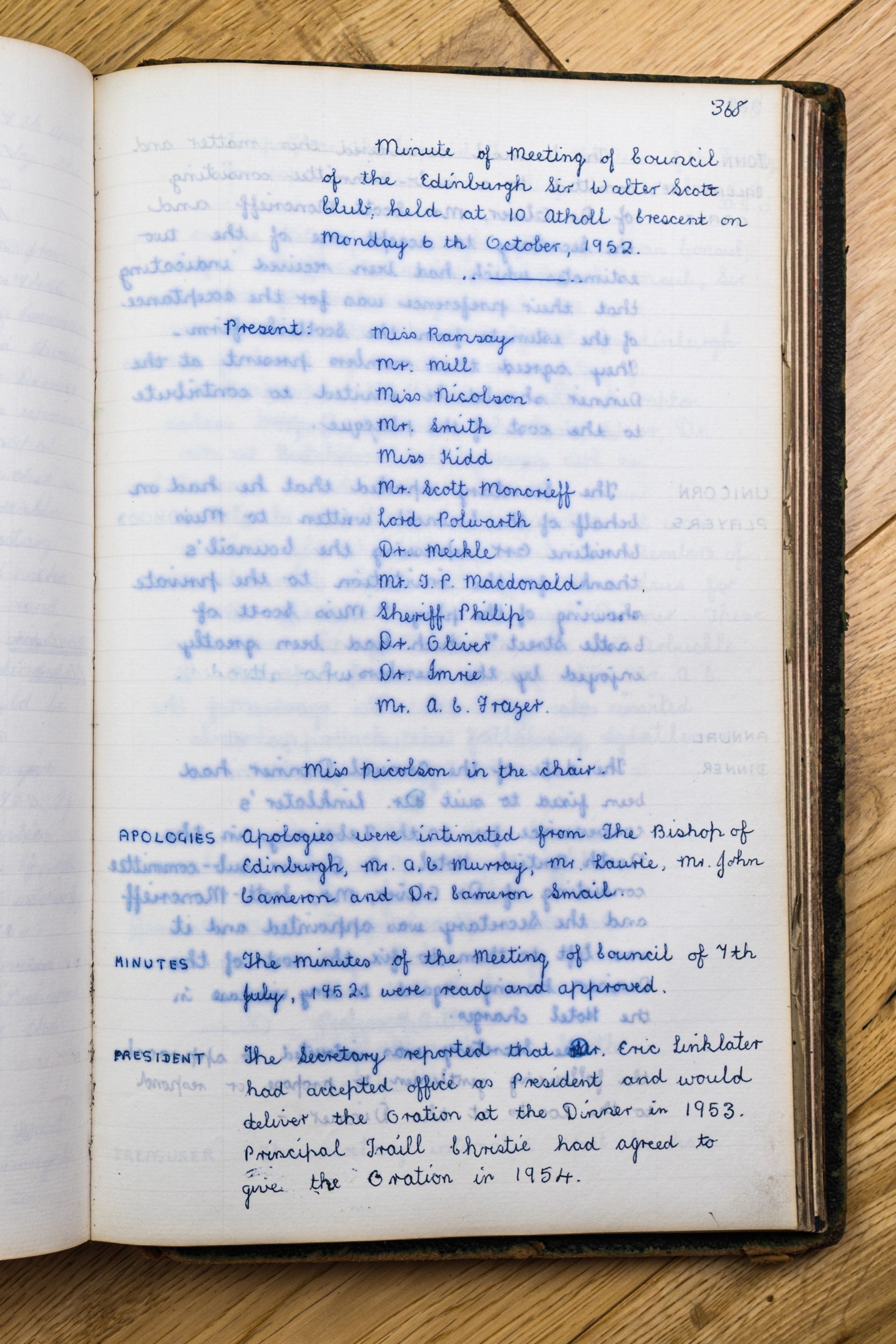
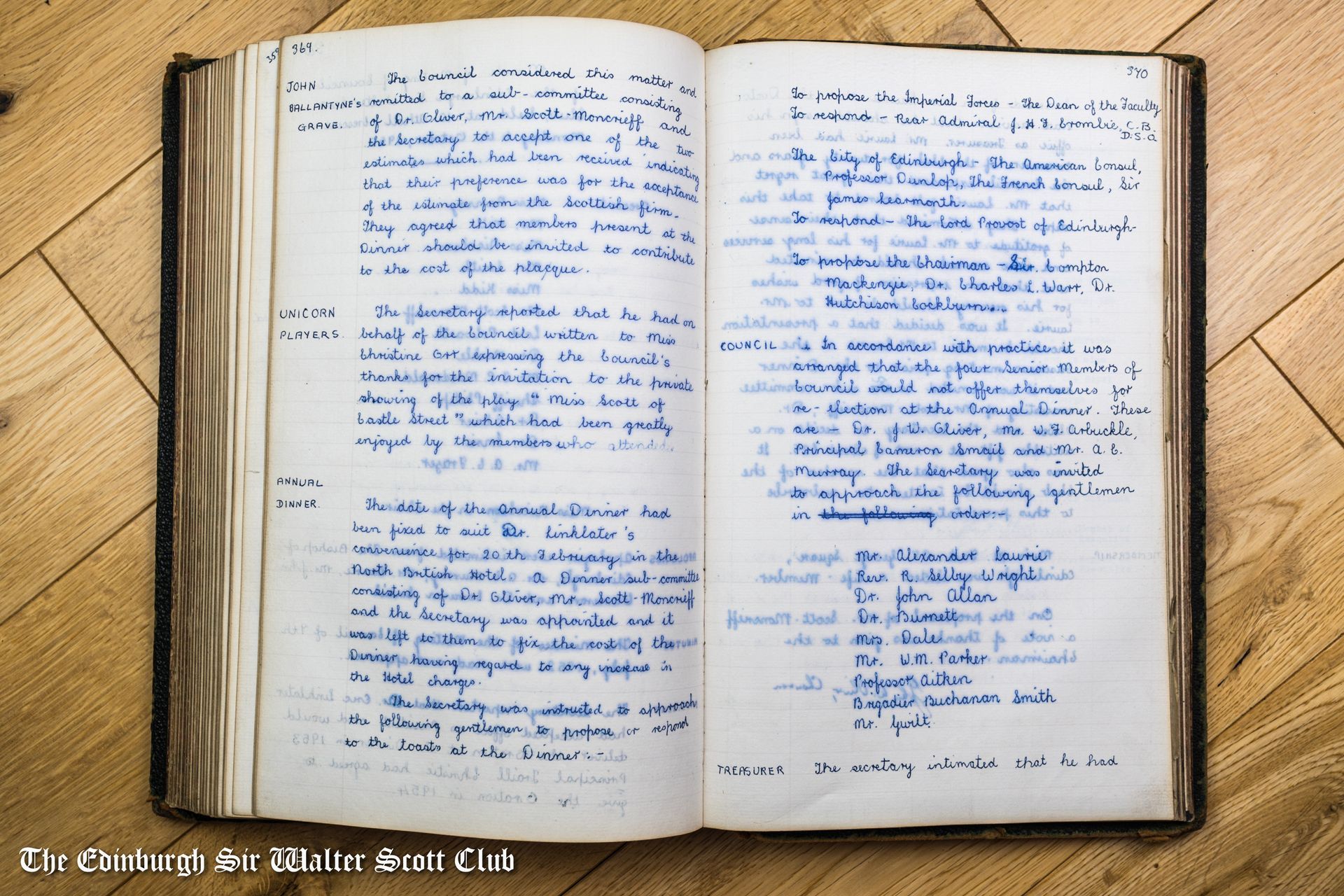
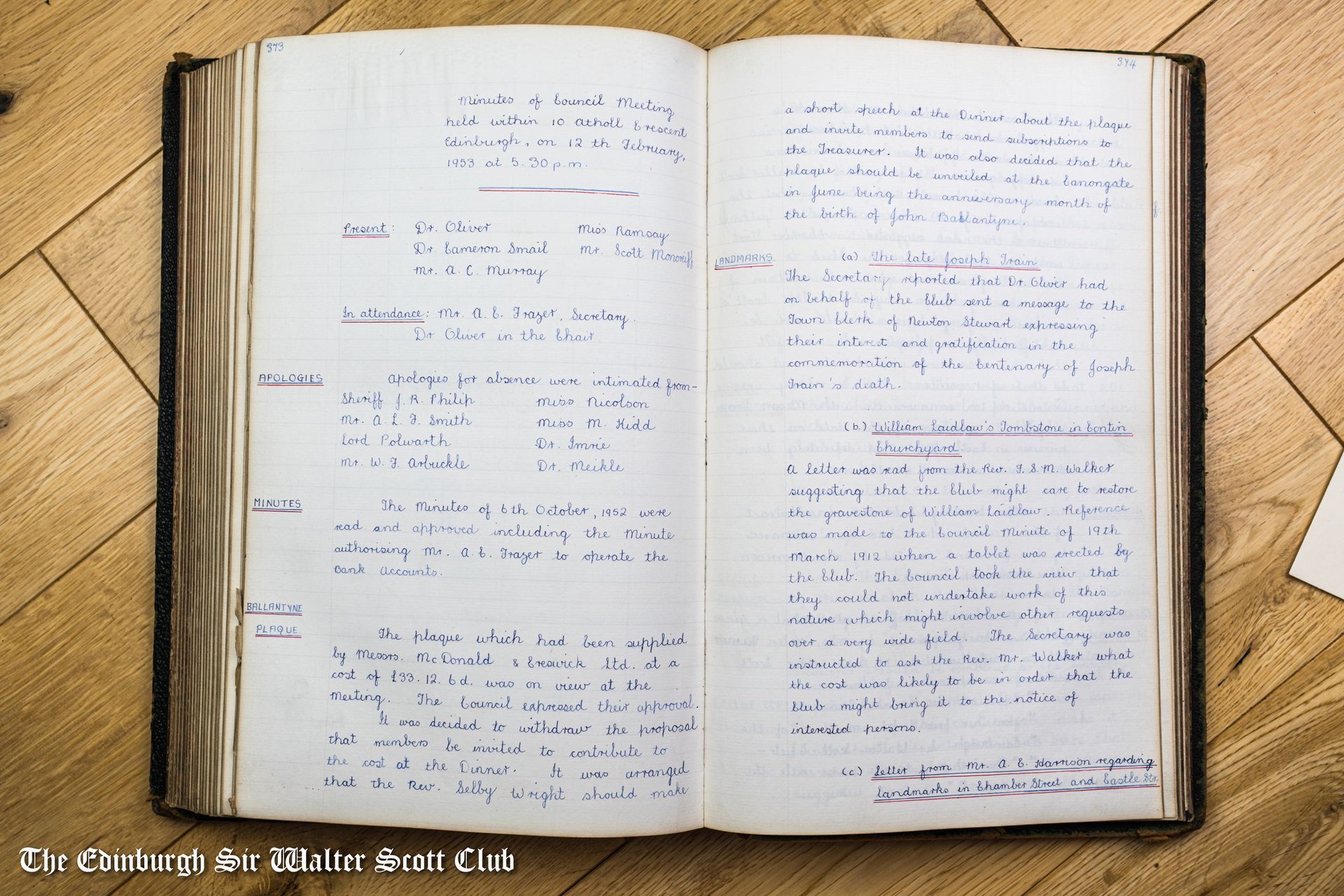
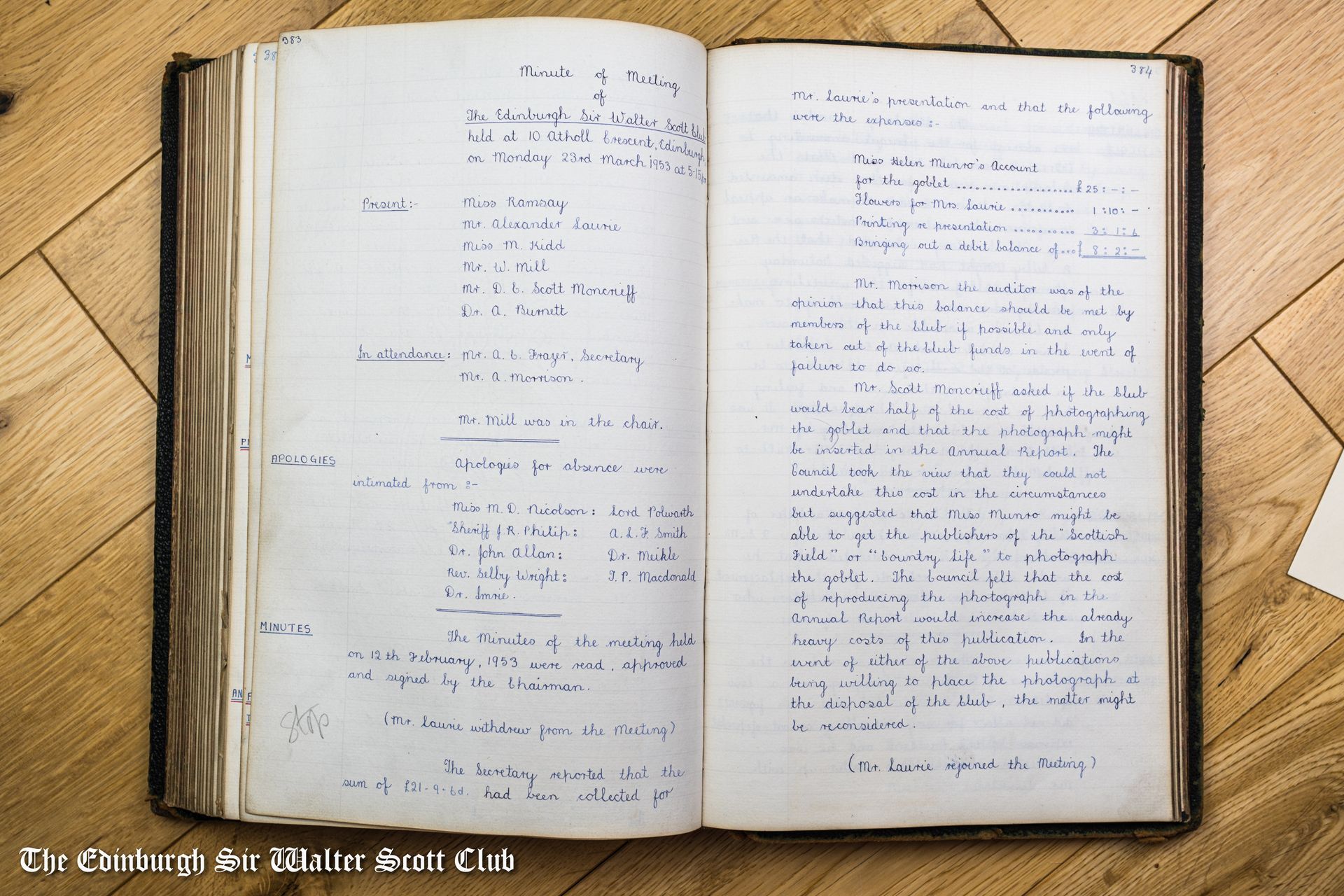
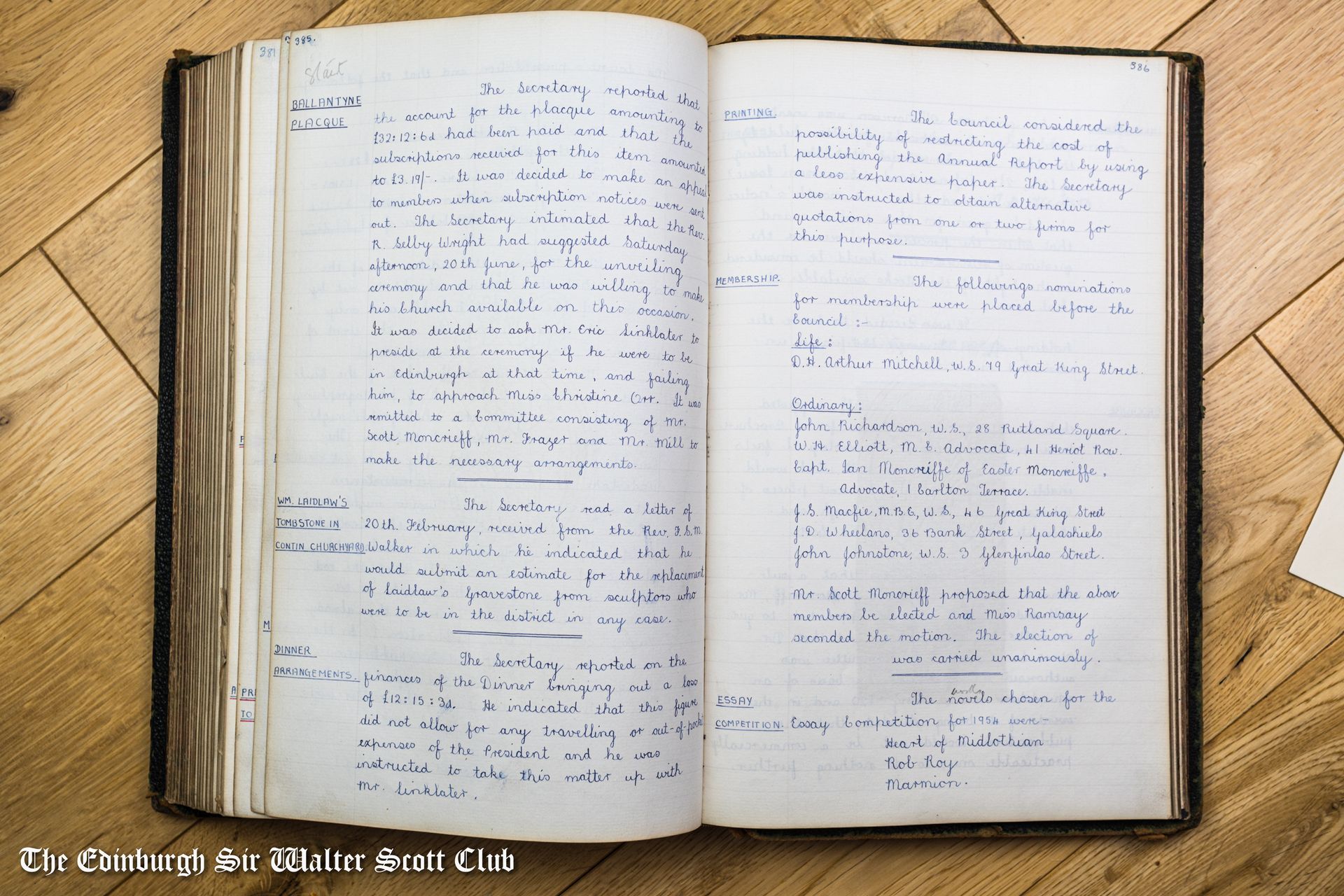
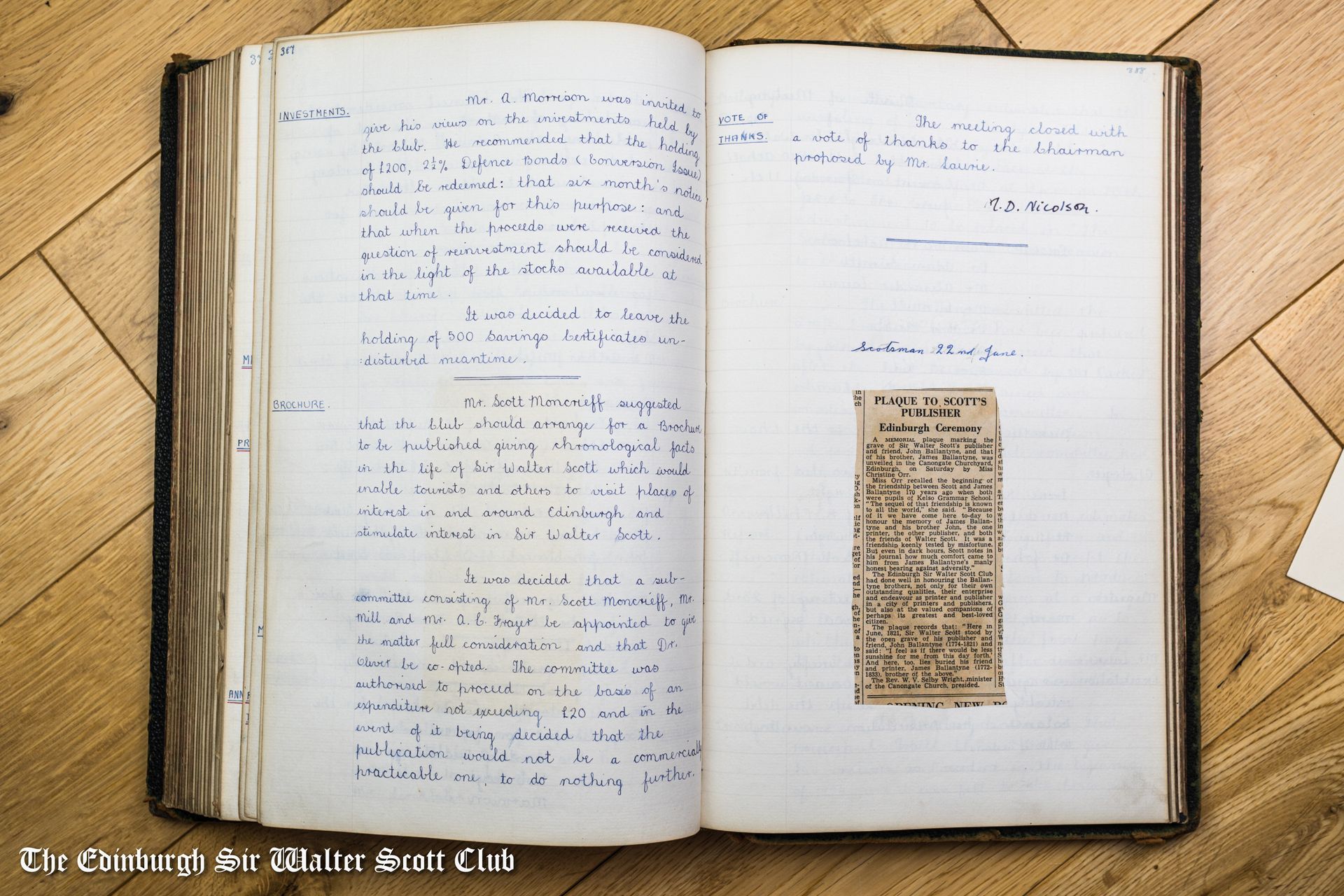
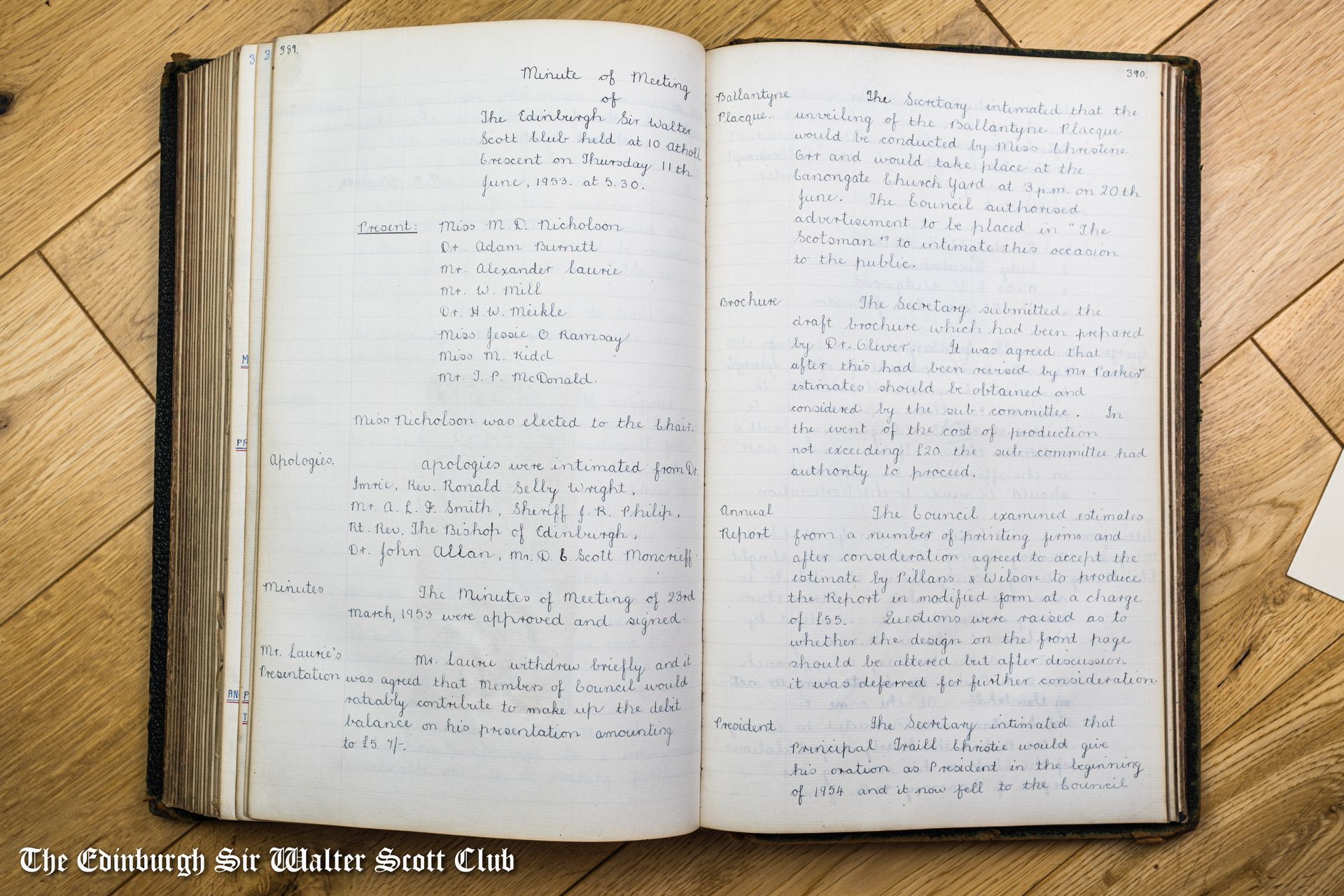
The Club Minute Bookings showing the paper-trail.
Research Note:
For many years the exact origins of the Ballantyne plaque were uncertain. The Club’s published Annual Reports make only brief financial reference to the memorial, and no narrative description of the ceremony appears in them.
By consulting the original Council minute books of the Edinburgh Sir Walter Scott Club, however, the full story can now be reconstructed. These handwritten records show the proposal first discussed in July 1952, the commissioning of the plaque in early 1953, and the arrangements made for its unveiling in June of that year.
The minutes confirm that the plaque was unveiled in Canongate Kirkyard on 20 June 1953. Contemporary newspaper reports and the Canongate Chronicle account of the ceremony further illuminate the occasion, recording the address given by Miss Christine Orr and the presence of members of the Club and invited guests.
Together these sources restore the forgotten story behind one of the Scott Club’s most significant memorials in Edinburgh.
Special thanks to Eric Drake (a volunteer guide at Canongate Kirk) who help solve this mystery by discovering these newspapers articles:
The Scotsman, 21 February 1953
Announcement of the forthcoming plaque
In the column “Story-Teller and Recreator of History — Mr Eric Linklater on Scott”, the article ends with the following notice:
“BALLANTYNE PLAQUE.
The Edinburgh Sir Walter Scott Club is arranging for a bronze plaque to be placed in the Canongate Kirkyard marking the grave of John Ballantyne, Scott’s publisher and friend, and recording the words spoken by Scott at the graveside.”
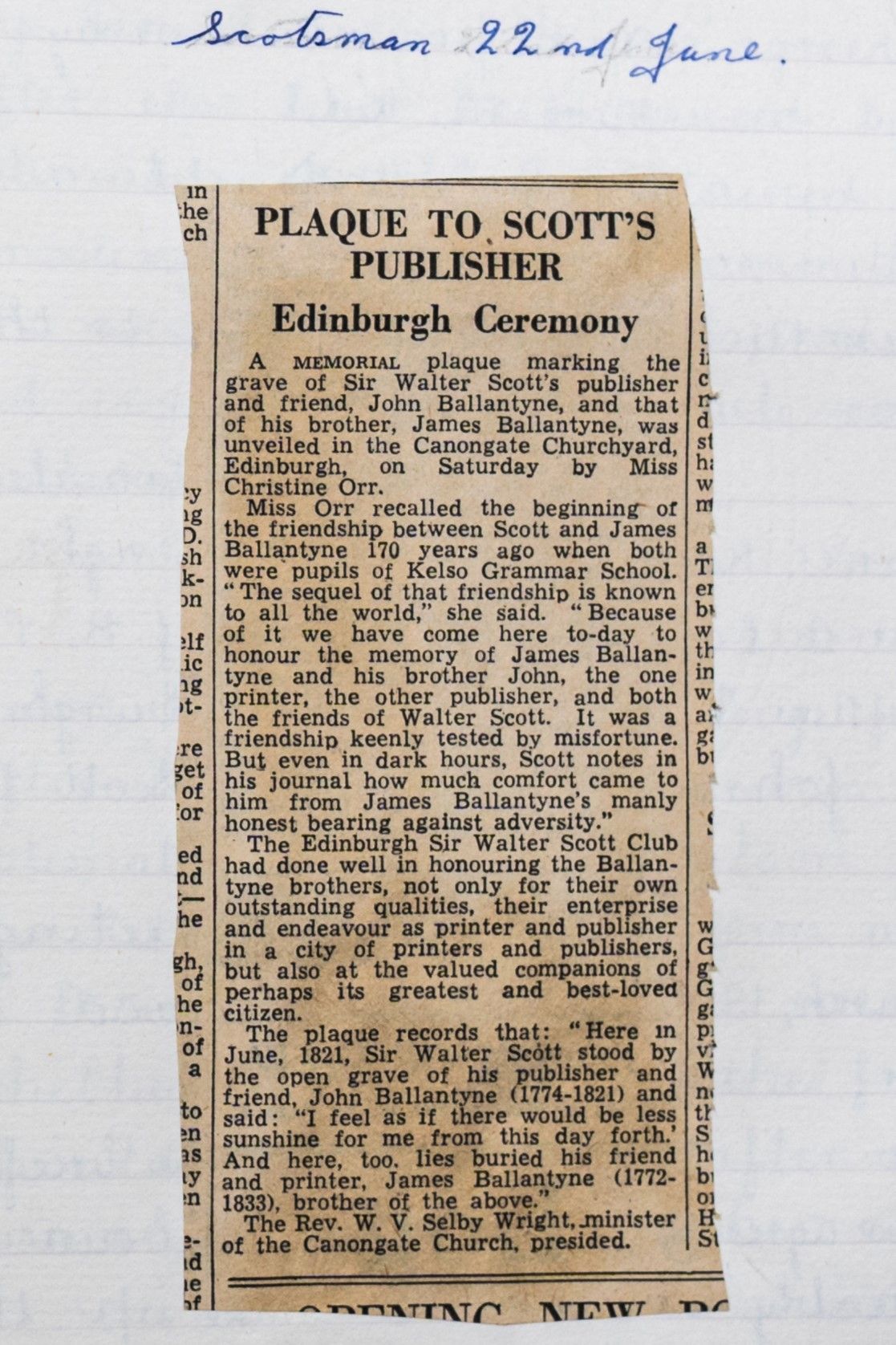
The Scotsman, 22 June 1953
Report of the unveiling
The Ballantyne plaque in Canongate Kirkyard was erected by the Edinburgh Sir Walter Scott Club and unveiled on 20 June 1953 to honour Scott’s publisher John Ballantyne.
The memorial was erected by the Edinburgh Sir Walter Scott Club.
Eric Linklater was the Club President at the time of this event.
